GST Changes from April 2026 – Key Amendments, Impact & Analysis
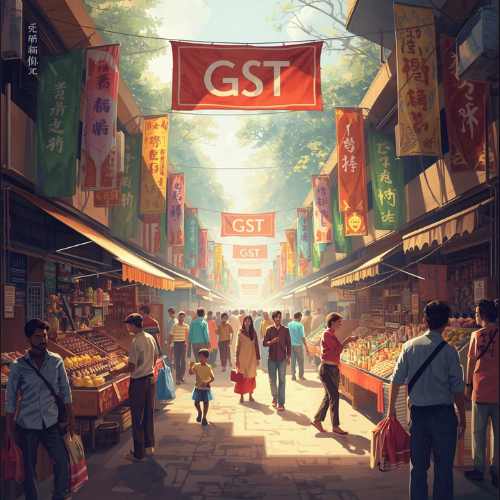
The Union Budget 2026 has introduced several important amendments under the Goods and Services Tax (GST) regime, aimed at simplifying compliance, reducing litigation, and improving ease of doing business. While the changes may not appear drastic in terms of rate revisions, they bring significant procedural and structural reforms that will impact businesses from April 2026 onwards.
India is moving towards a more data-driven and compliance-oriented GST system, making it crucial for professionals and businesses to understand these changes in detail.
1. Focus on Simplification and Compliance
The major theme of GST changes in Budget 2026 is compliance transformation rather than rate changes. The government is focusing on:
-
Reducing disputes
-
Improving clarity in law
-
Strengthening digital compliance
-
Aligning GST with business practices
These reforms are part of the broader initiative to make GST more transparent and business-friendly.
2. Major GST Amendments Applicable from April 2026
(A) Relief in Post-Supply Discounts
One of the most important changes is related to post-sale discounts.
Earlier Position:
-
Discount was allowed only if agreed before supply
-
It had to be linked to specific invoices
New Amendment:
-
Condition of linking discount to invoice is removed
-
Businesses can issue credit notes even without prior agreement
Impact:
-
Reduces litigation
-
Aligns GST with commercial practices
-
Benefits FMCG, distributors, and trading businesses
Now, suppliers can reduce their output tax liability by issuing credit notes, provided the recipient reverses proportionate ITC.
(B) Amendment in Refund Provisions (Inverted Duty Structure)
Refund provisions have been simplified significantly.
Key Changes:
-
90% provisional refund allowed for inverted duty structure
-
Removal of minimum refund limit of ₹1,000
Impact:
-
Faster refund processing
-
Improved working capital
-
Boost to exporters and manufacturers
This change makes GST refunds more taxpayer-friendly.
(C) Clarification on Credit Notes (Section 34)
The government has clarified the link between valuation and credit notes.
Change:
-
Explicit linkage between Section 15 (valuation) and Section 34 (credit note)
-
Post-supply discounts are now legally recognized
Impact:
-
Legal clarity
-
Reduced departmental disputes
-
Better compliance
(D) Place of Supply – Relief to Exporters
A major change is introduced in place of supply rules for intermediary services.
Benefit:
-
Certain services can now qualify as exports (zero-rated)
Impact:
-
Boost to service exporters
-
Reduction in classification disputes
-
Encouragement to foreign exchange earnings
3. GST Rate Rationalisation & GST 2.0 Impact
Recent reforms under GST 2.0 (implemented in 2025) have already simplified the tax structure.
Key Highlights:
-
Reduction of multiple tax slabs
-
Focus on 5% and 18% as primary rates
-
Higher rate for luxury goods (up to 40%)
Objective:
-
Simplify taxation
-
Boost consumption
-
Improve compliance
4. Removal / Restructuring of GST Cess
-
GST compensation cess is expected to be phased out (except on sin goods like tobacco)
-
New taxation models may be introduced for such goods
Impact:
-
Structural shift in indirect taxation
-
Higher focus on health-based taxation
GST changes effective from April 2026 indicate a clear shift towards a simplified, transparent, and technology-driven tax system. While businesses will benefit from reduced ambiguity and faster refunds, they must be prepared for stricter compliance and data-driven scrutiny.
For professionals and firms like Gadhia Associate, this is an opportunity to position as a trusted GST advisor, helping clients navigate the evolving tax landscape.