GST 2.0 Explained: How the New 5%, 18% and 40% Slabs Are Changing Prices for Gujarat Businesses

On the morning of 22 September 2025, a lot of shopkeepers in Ahmedabad walked into their stores and had to re-price half their shelves. Toothpaste, namkeen, a new TV, the small car a customer had booked the week before — the GST on all of it had changed overnight. If you run a business and the last few months have felt confusing at the billing counter, you're not imagining it. India quietly moved to what everyone's calling GST 2.0, and it's the biggest reshuffle of rates since GST began in 2017.
Here's a plain-English look at what changed, what's cheaper, what isn't, and the housekeeping you need to finish before it bites you.
Four slabs became two
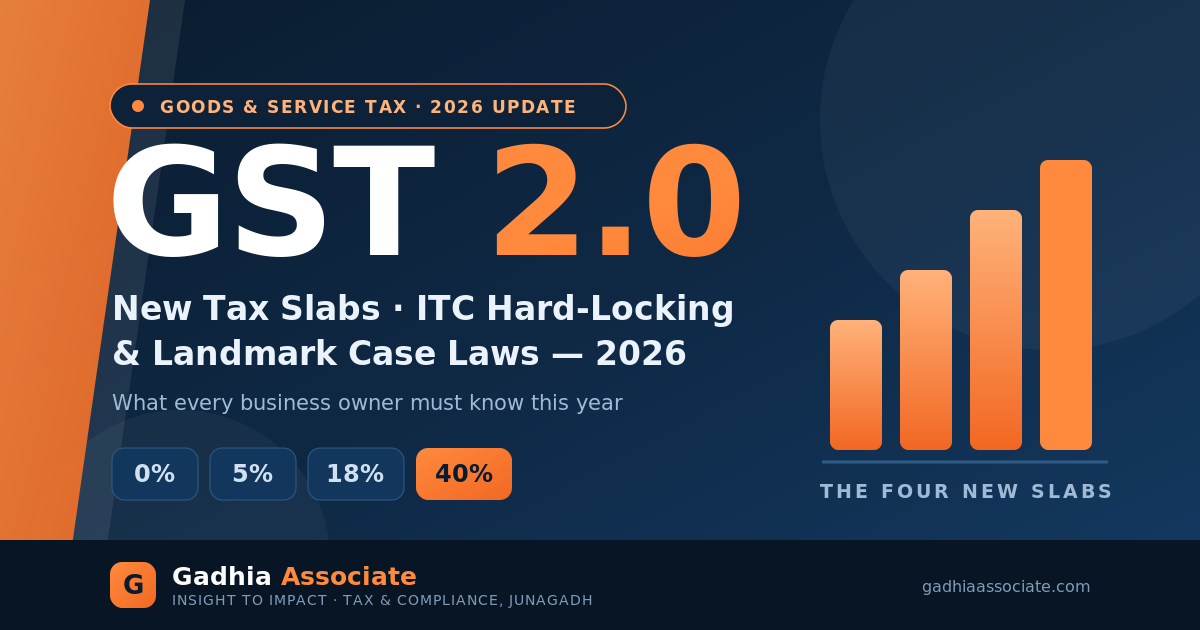
For eight years we juggled four main rates — 5%, 12%, 18% and 28%. The 56th GST Council meeting on 3 September 2025 scrapped that mess. From 22 September, most goods and services sit in just two slabs: 5% for everyday and merit items, and 18% as the standard rate. The old 12% and 28% brackets are gone for the most part — the 12% items mostly dropped to 5%, and the 28% items mostly fell to 18%.
There's still a sting in the tail. A new 40% slab now applies to a short list of luxury and sin goods — think high-end SUVs, aerated and energy drinks, and the like. A couple of niche rates (such as 3% on gold and 0.25% on rough diamonds) carry on as before. So when someone tells you GST is now only two rates, that's broadly true for the things most of us buy and sell, but not literally everything.
What got cheaper, what got costlier
Roughly 175 items became cheaper. Packaged foods, dry fruits, dairy, snacks, refrigerators, air-conditioners, tractors and small cars all moved down. A small car that earlier attracted 28% now draws 18% — and the compensation cess on most vehicles (except luxury ones) has been removed too, which is a real saving on the on-road price.
On the other side, that fizzy drink got pricier. Carbonated and caffeinated beverages that sat at 28% now face the 40% slab. Big SUVs above 1,500cc and longer than four metres also land in the 40% bracket. If you sell any of these, your customer is paying noticeably more — so explain why before they assume you simply hiked your margin.
Zero GST on your insurance premium
This one deserves its own line. From 22 September 2025, individual life insurance and individual health insurance policies — including family floater plans — are completely exempt from GST. The rate dropped from 18% to nil. On a Rs 25,000 health premium, that's Rs 4,500 you simply don't pay anymore.
One catch worth knowing: group insurance policies still attract 18%, and motor insurance hasn't changed either — your car insurance still carries 18% GST. So if a relative tells you insurance is GST-free now, they're only half right.
The housekeeping you can't skip
Lower rates are good news, but they create work. Have you updated the tax rates in your billing software and your accounting system? An invoice raised at the old rate after 22 September is simply wrong, and your buyer's input tax credit can get stuck because of it. Re-tag your inventory, fix your HSN-to-rate mapping, and check any open purchase orders that straddle the change date.
Watch your input tax credit too. If you're selling at 5% but bought stock that carried 18%, you may build up more credit than output — that's normal, but it changes your cash flow and your refund position. Pricing is the other big one: don't quietly pocket the rate cut. Anti-profiteering rules expect genuine reductions to reach the customer, so revise your MRPs and price lists rather than hoping nobody notices.
A few things people get wrong
The most common mistake? Assuming every product fell to a lower rate. It didn't — check each HSN code instead of guessing. The second: forgetting that what matters is the date of supply, not the date you happen to raise the invoice. And third, businesses dealing in the 40% goods sometimes miss that cess rules differ item by item. When in doubt, look up the specific notification rather than trusting a WhatsApp forward.
How Gadhia Associate Can Help
GST 2.0 is a genuine win for most businesses, but only if your invoicing, ITC and pricing are set up correctly from day one. At Gadhia Associate, we help Gujarat businesses re-map HSN codes to the new rates, clean up billing software, review input-credit positions, and stay on the right side of anti-profiteering rules. If you're unsure whether your products moved to 5%, 18% or 40% — or your last few months of invoices need a second look — reach out and we'll sort it out with you. Drop us a line and let's make the new GST work in your favour.