GST on Works Contract in India 2026: Tax Rates, Input Tax Credit and Compliance Rules Explained
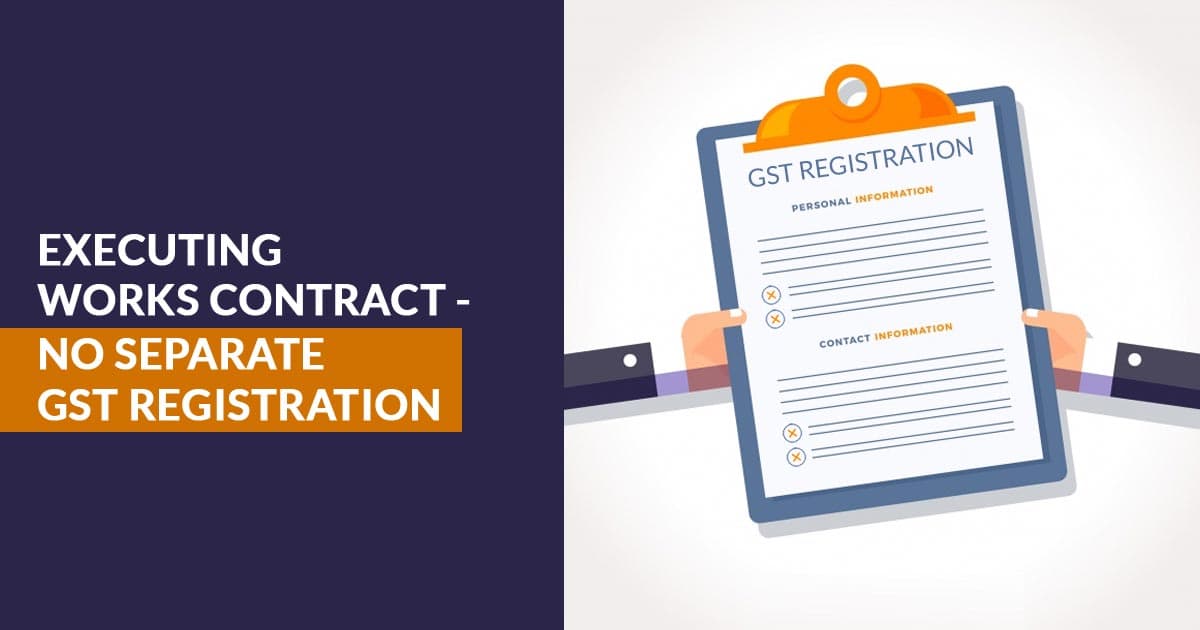
GST on Works Contract: What Builders, Contractors and Property Owners Must Know in 2026
If you are involved in construction — as a builder, developer, contractor, or even a property owner hiring contractors — GST on works contracts is something you absolutely cannot afford to get wrong. Works contract GST rules are among the most complex in India's tax framework, with different rates applying to different types of projects, different ITC eligibility rules, and frequent clarifications from the GST Council. Here is a complete, plain-English guide to where things stand in 2026.
What Is a Works Contract Under GST?
A "works contract" under GST is any contract that involves both supply of goods and supply of services in the context of construction, fabrication, repair, renovation, or maintenance of immovable property. Examples include: building a house, constructing a commercial complex, renovating an office, building roads or bridges, fitting plumbing or electrical systems. The key point is that works contract is treated as a supply of service under GST — not a mixed supply — which determines how it is taxed.
GST Rates on Works Contracts in 2026
The GST rate on a works contract depends on the nature of the project. Here are the main categories:
5% GST applies to works contracts for affordable housing projects (houses where carpet area is up to 60 sqm in metros and 90 sqm in other cities, with value up to Rs 45 lakh), works contracts for economically weaker section (EWS) housing, works contracts relating to railways, metro, and specified government infrastructure projects.
12% GST applies to works contracts for construction of affordable residential apartments, works contracts for government building projects not covered under 5% category, and works contracts by a sub-contractor to the main contractor for affordable housing.
18% GST applies to all other works contracts — including commercial construction, industrial construction, mixed-use developments, renovation and repair of commercial buildings, and construction of non-affordable residential projects. This is the standard rate for most private sector construction work.
One important point: works contracts for construction of new residential buildings (except affordable housing) are NOT eligible for ITC. The contractor charges 18% GST, but the developer or property owner cannot claim that GST back. This is a deliberate policy choice to reduce cascading tax in real estate.
Input Tax Credit (ITC) on Works Contracts: What You Can and Cannot Claim
ITC rules on works contracts are very restrictive, and getting this wrong is the number one GST mistake in the construction sector. Here is what you need to know:
ITC is BLOCKED for works contracts related to the construction of immovable property that will be used for your own business (office building, factory, warehouse you own). Even if you are in the business of construction yourself, the GST paid to your contractor for building your own premises is NOT claimable as ITC.
ITC IS AVAILABLE if you are in the business of making taxable supplies of works contract services yourself (i.e., you are a contractor), and you receive works contract services from a sub-contractor to execute your contract. In this case, the GST paid to the sub-contractor can be set off against the GST you collect from your client.
Practically, this means: a real estate developer building residential apartments cannot claim ITC on construction services, and a business building its own office cannot claim ITC. But a contractor building the office for someone else can claim ITC on sub-contractor invoices.
Reverse Charge Mechanism (RCM) on Works Contract
If a GST-registered company receives works contract services from an unregistered contractor, RCM applies. The company must pay 18% GST directly to the government (rather than to the contractor). The contractor does not charge GST, but the company pays it under RCM and can claim it as ITC (if eligible). Many businesses miss this and end up with a GST liability they didn't account for in their budget.
Common Compliance Issues in Works Contract GST
At Gadhia Associate, these are the most frequent problems we see in our client audits: applying 5% or 12% GST when the project actually qualifies for 18% (or vice versa), claiming ITC on construction services for own use (this is blocked), not applying RCM on payments to unregistered contractors, incorrect HSN code classification for the works contract service, and not maintaining proper contracts, completion certificates, and invoices as required for GST audit purposes.
The GST department has become increasingly aggressive in auditing construction companies, especially large developers and infrastructure contractors. Demand notices, interest, and penalties can be severe. A proper compliance review before filing returns can save significant money.
Transition from Old Rules to 2026 Clarifications
The GST Council has issued multiple clarifications on works contracts since GST was introduced in 2017. In 2024 and 2025, there were specific clarifications on what constitutes "affordable housing," on ITC eligibility for certain types of fabrication contracts, and on the treatment of composite supply vs works contract in mixed projects. Staying up to date with these circulars is essential for contractors and developers.
Get Expert Guidance from Gadhia Associate
Works contract GST requires careful analysis of the project type, contract terms, and ITC eligibility before every invoice is raised. Gadhia Associate specialises in GST advisory and compliance for the construction and real estate sector. We help contractors, developers, and property owners structure their contracts correctly, file returns accurately, and handle GST notices. Reach us at Contact@gadhiaassociate.com or visit gadhiaassociate.com.