GST E-Invoicing Rules 2026: What Every Business Must Know to Stay Compliant
If your business issues invoices, you need to know about the latest GST e-invoicing rules in 2026. The government has tightened compliance significantly, and missing these rules can mean blocked returns, penalties, and disrupted cash flow. Whether you run a small business or a mid-sized company, this guide breaks down everything in simple terms.
What Is GST E-Invoicing?
E-invoicing (electronic invoicing) under GST means that your Business-to-Business (B2B) invoices must be reported to a government portal called the Invoice Registration Portal (IRP) before they are shared with customers. The IRP validates the invoice and generates a unique Invoice Reference Number (IRN) and a QR code. Only after this validation is your invoice considered legally valid under GST.
E-invoicing was introduced in phases starting from large businesses and has now been extended to cover businesses with an Annual Aggregate Turnover (AATO) of ₹10 crore or above.
Key E-Invoicing Rule Change in 2026: The 30-Day Deadline
One of the most important updates that came into effect in 2026 is the strict 30-day reporting window. If your business has an AATO of ₹10 crore or more, you must upload your invoices to the IRP within 30 days from the invoice date. After 30 days, the system will block IRN generation — meaning you simply cannot generate a valid GST invoice for that transaction anymore.
This is a major change from the earlier system where businesses had more flexibility in when they uploaded invoices. Now the deadline is hard and non-negotiable.
E-Way Bill Changes Linked to E-Invoicing
The government has also announced changes to the E-Way Bill system that are linked to e-invoicing. Two new functionalities — the mandatory 'Ship To GSTIN' field and a voluntary closure feature — were scheduled for June 2026 but have been postponed to August 1, 2026. This gives businesses a little more time to prepare their systems for the updated E-Way Bill requirements.
Once implemented, these changes will make it mandatory to mention the GSTIN of the destination party in all E-Way Bills, improving tracking and reducing tax evasion. Businesses should start updating their billing software now to ensure smooth compliance by August.
Bank Account Details Are Now Mandatory
From January 1, 2026, valid bank account details are required before you can begin GST compliance activities. Without linking a valid bank account to your GST registration, you may face restrictions in filing returns and generating e-invoices. This rule was introduced to ensure that refunds and credits go only to verified accounts, reducing fraud in the GST system.
If you haven't already verified your bank account details on the GST portal, do it immediately. A small oversight here can completely block your compliance activities.
Technology-Based Enforcement: What It Means for You
The 2026 GST framework marks a significant shift from trust-based compliance to technology-based enforcement. The GST portal now has the ability to automatically block return filing if certain conditions are not met — such as missing bank details, non-filing of previous returns, or e-invoicing non-compliance. This means the days of filing returns late with just a small penalty are largely over for repeat defaulters.
Businesses need to be proactive. Maintain proper invoice records, upload e-invoices on time, keep your GST registration details updated, and file all returns by their due dates. The system is watching, and it acts automatically.
How Gadhia Associate Can Help
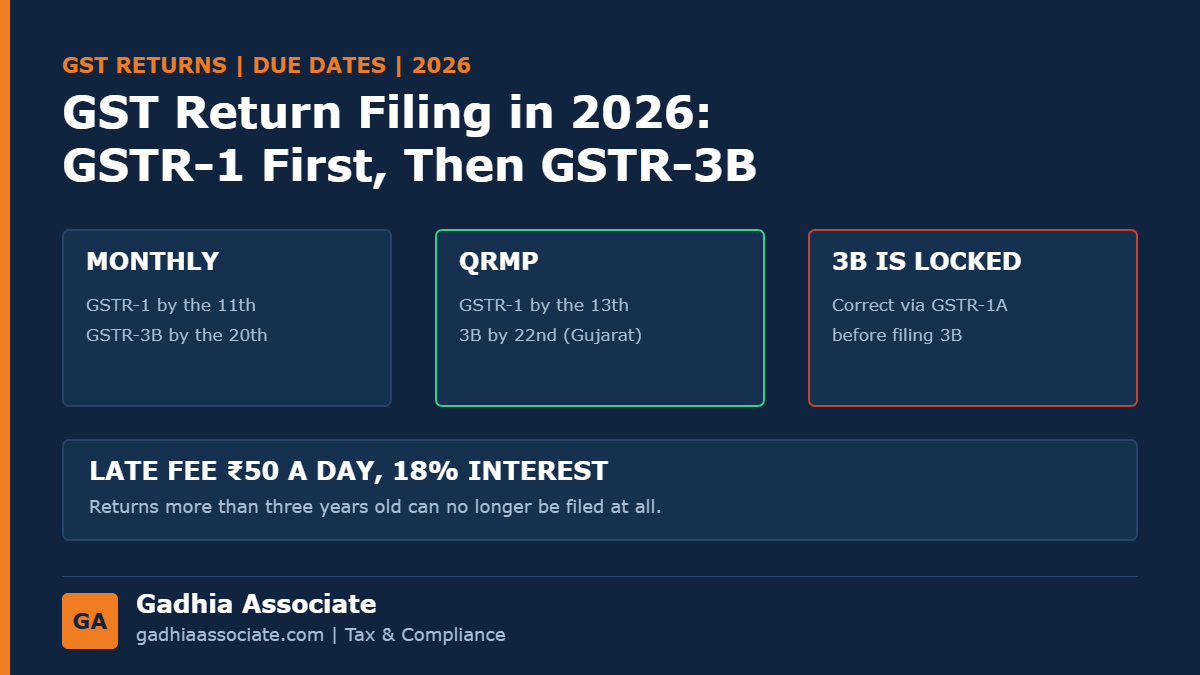
Navigating GST e-invoicing rules can be complex, especially when the rules keep changing. At Gadhia Associate, we help businesses of all sizes stay fully GST compliant — from setting up e-invoicing systems and ensuring timely IRN generation to filing GSTR-1, GSTR-3B, and handling GST notices. Our experienced CA team in Ahmedabad keeps track of every circular and rule change so you don't have to.
Don't let compliance slip through the cracks. Contact Gadhia Associate today at Contact@gadhiaassociate.com or visit gadhiaassociate.com for expert GST support tailored to your business needs.