Trust and NGO Annual Compliance: Form 10B or 10BB, Form 10BD and 10BE, and the Deadlines That Cost You Your 80G
A donor has emailed asking for the 10BE certificate because their CA wants it. Or your auditor has said something about 10B versus 10BB and the date is close. Either way you are the trustee or the secretary of a registered trust, society or Section 8 company, you are not a tax person, and you are trying to work out what is actually due and what it costs to be late. The cost is not theoretical. Miss the donation statement and your donor cannot claim the 80G deduction at all, which means next year they give to somebody else.
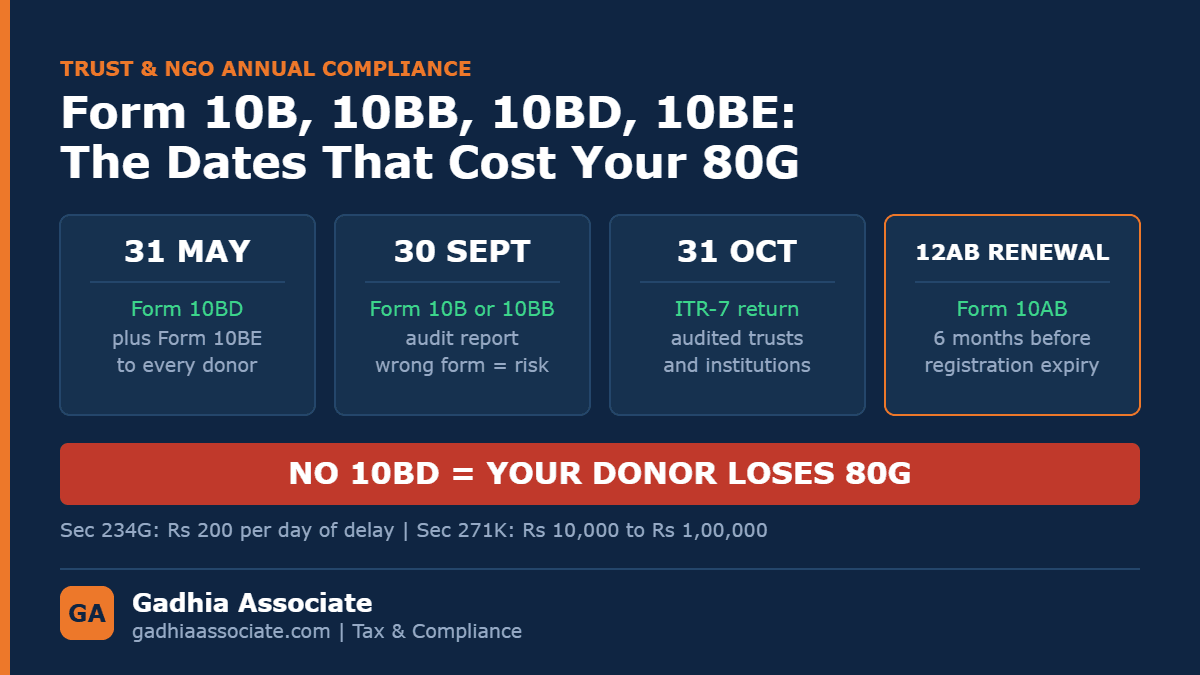
The direct answer: two dates decide it. File Form 10BD, the statement of donations, by 31 May and issue Form 10BE certificates to every donor. File your audit report in Form 10B or Form 10BB by 30 September, one month before the ITR-7 due date of 31 October. Miss 10BD and your donors lose their 80G deduction.
Does my trust file Form 10B or Form 10BB, and how do I tell?
Form 10B applies if any one of three conditions is met, and Form 10BB applies to everyone else. The three conditions, as the current rule stands, are:
- Total income of the trust or institution, computed before giving effect to the exemptions under Sections 11 and 12, exceeds Rs 5 crore
- The trust received any foreign contribution during the previous year
- The trust applied any part of its income outside India during the previous year
Note the first test carefully. It is total income before exemption, not surplus, and not the figure after netting off application. A school trust with Rs 6 crore of fee receipts that spends nearly all of it still crosses the line. Any FCRA money at all, even a single small foreign remittance, pushes you into 10B regardless of size.
Filing the wrong one is treated as not having furnished the report. That is not a technicality; the audit report is a condition for claiming exemption under Section 11, so the consequence is a tax demand on income you have already spent on the charity. The CBDT has stepped in before, notably by Circular 2/2024, which let trusts that had filed the wrong form for AY 2023-24 refile in the correct form by a later date. Relief like that is a one-off concession, not a standing right. Do not plan around it.
One practical point that catches trusts every year. The auditor uploads the form, but the trust has to accept it from its own e-filing login under Pending Actions and the worklist. An uploaded but unaccepted form is not a furnished form. Check your own login in the first week of October, not the auditor's email.
Why does 31 May matter more than any other date for an NGO?
Because 31 May is the date the whole 80G chain runs through. Form 10BD, the statement of donations, is due by 31 May following the end of the financial year in which the donations were received. Once it is filed, the portal generates Form 10BE, the certificate of donation, and the trust downloads it and issues one to every donor.
The commercial consequence is the part trustees underestimate. A donor's 80G claim is matched against what the institution reported in 10BD. If the donation is not in your 10BD, the donor has no 10BE, and the deduction goes. You can send them a receipt on your letterhead with the seal and the registration number, and it will not help them. Corporate and CSR donors in particular ask for the 10BE before they release the next tranche, so this is a fundraising issue dressed up as a compliance issue.
What stalls 10BD is data, every single year. The form needs the donor's name, address, PAN or other identification, the unique identification number, the type of donation (corpus, specific grant, others) and the mode of receipt. Receipt books full of cash donations with no PAN cannot be reported properly. Start collecting PANs at the point of receipt in April, not in the last week of May, and keep the donation type recorded on the receipt itself because reconstructing it eleven months later is guesswork.
Get your dates checked before the next one passes
If you are not certain which audit form applies to your trust, or whether last year's 10BD went through, that is a fifteen-minute check. Gadhia Associate is a tax and compliance firm based in Junagadh, Gujarat, working with trusts, societies and NGOs across Saurashtra and the rest of India.
Call or WhatsApp +91 82005 28355 for a free first consultation. Send us your registration order and last year's ITR-7 and we will tell you what is open.
What are the penalties for late filing of Form 10BD?
Two separate provisions bite, and they stack. Under Section 234G there is a fee of Rs 200 for each day of delay in furnishing the statement or the certificate. Under Section 271K the Assessing Officer may levy a penalty of not less than Rs 10,000 and not more than Rs 1,00,000 for failure to furnish the statement of donations or the certificate.
An illustrative example. A trust in Junagadh collected Rs 20,00,000 of 80G-eligible donations in a year and filed Form 10BD on 20 June instead of 31 May. Twenty days of delay at Rs 200 works out to Rs 4,000 under Section 234G, and a Section 271K penalty of anywhere from Rs 10,000 upwards remains possible on top. Meanwhile every donor's 10BE is late. The figures are illustrative only and the actual fee and penalty depend on the facts and on the officer.
Late filing of the audit report is a different and larger problem, because it goes to the exemption itself rather than to a fee. Where the delay is genuine, the route is a condonation application under Section 119(2)(b). It is slow, it is discretionary, and it is not a plan.
What are Form 9A and Form 10, and what is the 85 percent rule?
A trust must apply at least 85 percent of its income towards its charitable objects during the year, and the two forms are the exits when it cannot. Section 11(1) sets the 85 percent requirement. If you fall short, you have two options and both need a form filed before the return.
- Form 9A is the deemed application route, used where income could not be applied because it was not actually received during the year or for another reason outside the trust's control. It lets you treat the shortfall as applied in the following year.
- Form 10 is the accumulation route, used where you are deliberately setting income aside for a stated purpose such as a building or a hospital wing. The purpose must be specified and the accumulation period cannot exceed five years, and the money has to be invested in the modes prescribed under Section 11(5).
Both are due before the return is furnished. Form 10 in particular is required at least two months before the Section 139(1) due date, so for a 31 October ITR-7 that means 31 August. Trustees discover this in October. Corpus donations are a separate track: a donation received with a specific written direction that it forms part of the corpus is not treated as income for the 85 percent test, provided it is invested in the Section 11(5) modes, and the written direction is what an officer will ask to see. Keep the donor letter.
When does my 12AB registration expire, and what is the renewal trap?
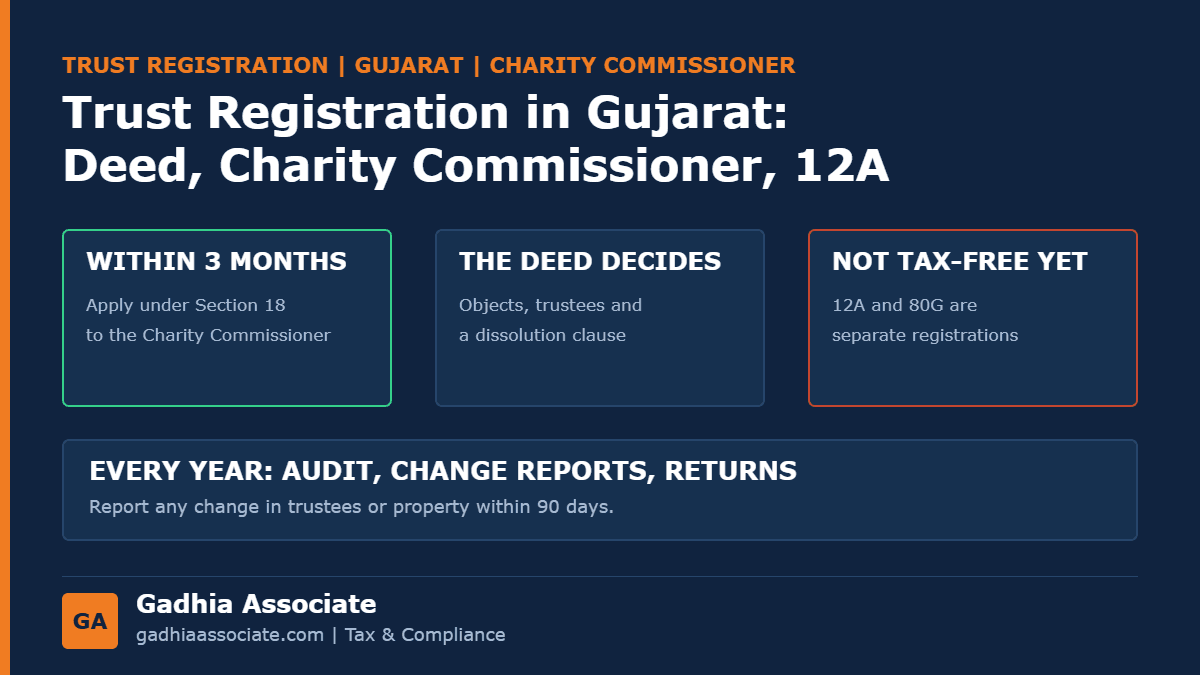
This is where most trusts slip, and it is the most expensive slip of the lot. Registration under Section 12AB is granted for a fixed period, historically five years, and renewal is applied for in Form 10AB. The application has to go in well before expiry, generally at least six months ahead. The Finance Act, 2025 changed the validity to ten years for institutions whose total income did not exceed Rs 5 crore in each of the two immediately preceding previous years, so smaller trusts may now hold a longer registration. Confirm your own validity period from your registration order rather than assuming, because the transition means different trusts are on different cycles.
The trap is simple. The registration order gets filed away in a cupboard after it arrives, nobody diarises the expiry, and the trust carries on for two more years believing it is registered. If 12AB lapses, the exemption goes and 80G goes with it, and re-registration is a fresh application, not a renewal. Check your validity dates on the e-filing portal today and put the date in whatever calendar the trust actually uses. Our article on 12A and 80G registration and renewal walks through the Form 10A and 10AB process in detail.
What is due when? An annual calendar for a registered trust
- April to May Collect donor PANs and finalise donation records for the year just ended
- 31 May File Form 10BD, then download and issue Form 10BE to every donor
- June to July Finalise accounts, complete the audit, decide whether Form 9A or Form 10 is needed
- 31 August File Form 10 where income is being accumulated, being two months before the ITR-7 due date
- 30 September Furnish the audit report in Form 10B or Form 10BB, and accept it in the trust's own e-filing login
- 31 October File ITR-7 for the assessment year
- Six months before expiry Apply for renewal of 12AB and 80G in Form 10AB
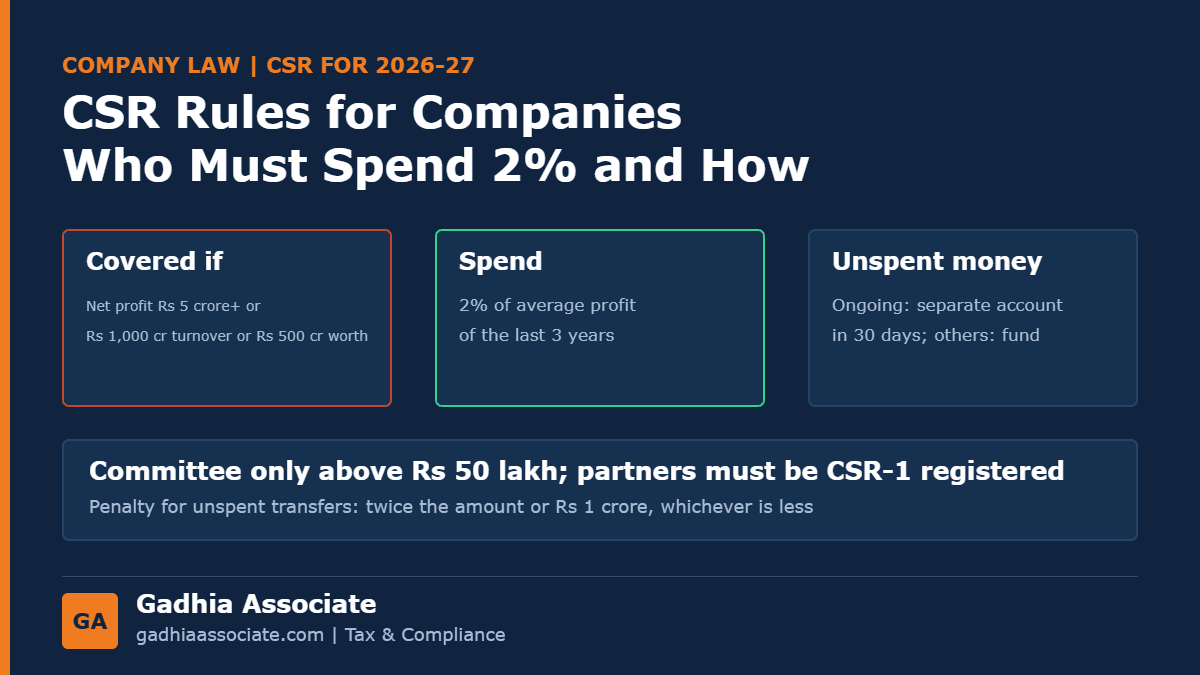
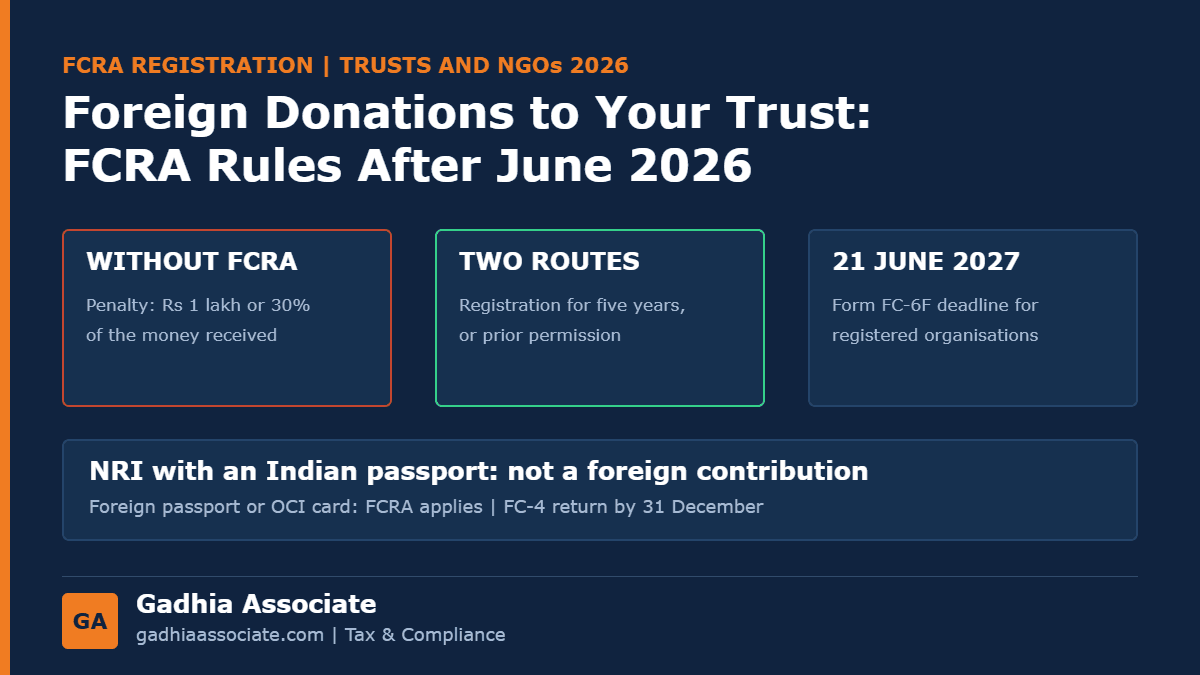
- Ongoing FCRA annual return where applicable, and Form CSR-1 registration if you intend to receive CSR funds, covered in our article on CSR-1 for NGOs
Where a due date is extended by a CBDT notification, the extension applies for that year only. Work to the statutory date.
Hand the calendar to someone who watches it
Trust compliance is not difficult work. It is dated work, and it fails when nobody owns the dates. We have been in practice since 2007 with over 7,000 clients across Saurashtra and Gujarat, a 5.0 Google rating from more than 100 reviews, fixed-fee and monthly plans, and same-day appointments at our Junagadh office.
Call or WhatsApp +91 82005 28355. First consultation is free, and we will start with your registration validity because that is usually the one nobody has checked.
Frequently asked questions
Can a donor claim 80G without Form 10BE?
In practice, no. The donor's 80G claim is matched against the donation the institution reported in Form 10BD, and Form 10BE is the certificate generated from that filing. A receipt on the trust's letterhead is not a substitute. If the donation was never reported in 10BD, the trust should file or correct the statement so the certificate can be issued.
What if my trust received no donations during the year?
If there were no 80G-eligible donations to report, there is nothing to state in Form 10BD, and trusts commonly do not file it for that year. The audit report and ITR-7 obligations are separate and continue regardless. Where you have any doubt about whether particular receipts are reportable, have it checked before 31 May rather than after.
Can Form 10BD be revised after filing?
Yes. The portal allows a correction statement so that wrong PANs, wrong amounts or missing donors can be fixed, and a fresh Form 10BE can then be issued to the affected donor. Do it promptly, because a donor who has already filed their own return with the wrong figure has a second problem to sort out.
We filed Form 10B when Form 10BB applied. What now?
Treat it as urgent. Furnishing the wrong form has been treated as non-furnishing, which puts the Section 11 exemption at risk for that year. Check whether any CBDT relief covers your year, refile in the correct form if the window allows, and be ready with a condonation application under Section 119(2)(b) supported by the reason for the error.
Do the section numbers change under the new income tax law?
The Income-tax Act, 2025 took effect from 1 April 2026 and renumbered provisions across the statute, including those dealing with charitable institutions. The forms and the substantive obligations described here continue, but the section numbers quoted in a notice or an order may not match the 1961 Act numbers you are used to. Check which Act the document refers to.
This reflects the position as we understand it in September 2026. Thresholds, forms and due dates change through CBDT notifications and circulars, and outcomes depend on the facts of each institution. Please confirm the current position with us, or with your own adviser, before acting on anything here.