Udyam Registration in 2026: Process, New MSME Classification Limits, Benefits and the 45-Day Payment Protection
Udyam Registration in 2026: the short answer
Udyam Registration is the government's official MSME registration. It is free, fully online on the Udyam Registration portal, needs only Aadhaar and PAN with GSTIN where applicable, requires no document uploads, and never expires. Once registered you get a permanent Udyam Registration Number and an e-certificate that unlocks the 45-day payment protection, collateral-free credit, priority sector lending and preference in government tenders.
For Gujarat's dense base of manufacturers, traders and job-work units, from the oil mills and ceramic units around Junagadh to the engineering clusters further north, Udyam is the single cheapest piece of compliance with the highest practical return. Here is exactly how it works in 2026.
How do I register for Udyam?
Registration is a self-declaration process on the official government portal. The flow is short:
- Open the Udyam Registration portal and choose the option for new entrepreneurs not yet registered as MSME
- Enter the Aadhaar number and name of the proprietor, managing partner, karta, or an authorised signatory in the case of a company, LLP, society or trust
- Validate the OTP sent to the Aadhaar-linked mobile number
- Enter the PAN of the enterprise and validate it; for companies and LLPs the entity PAN is mandatory
- Enter GSTIN where the enterprise is required to be registered under GST law
- Fill in the enterprise details: name, type of organisation, plant and office addresses, bank details, main activity, NIC code, number of employees, and investment and turnover figures
- Submit and validate the final OTP
Investment and turnover figures are picked up automatically from linked Income Tax and GST systems, so what you type is cross-checked rather than trusted. No documents are uploaded at any stage, and there is no proof, certificate or affidavit to attach. The certificate is generated with a QR code and can be downloaded any time.
Is Udyam registration free?
Yes. There is no government fee whatsoever. A steady stream of private websites with official-looking names charge several hundred to several thousand rupees for what is a free service, and some of them collect Aadhaar and PAN data along the way. The genuine portal is the government one operated by the Ministry of Micro, Small and Medium Enterprises; check the domain before entering anything. If you would rather have a professional handle the filing correctly, that is a service fee, not a government fee, and it should be stated as such.
What are the new MSME limits in 2026?
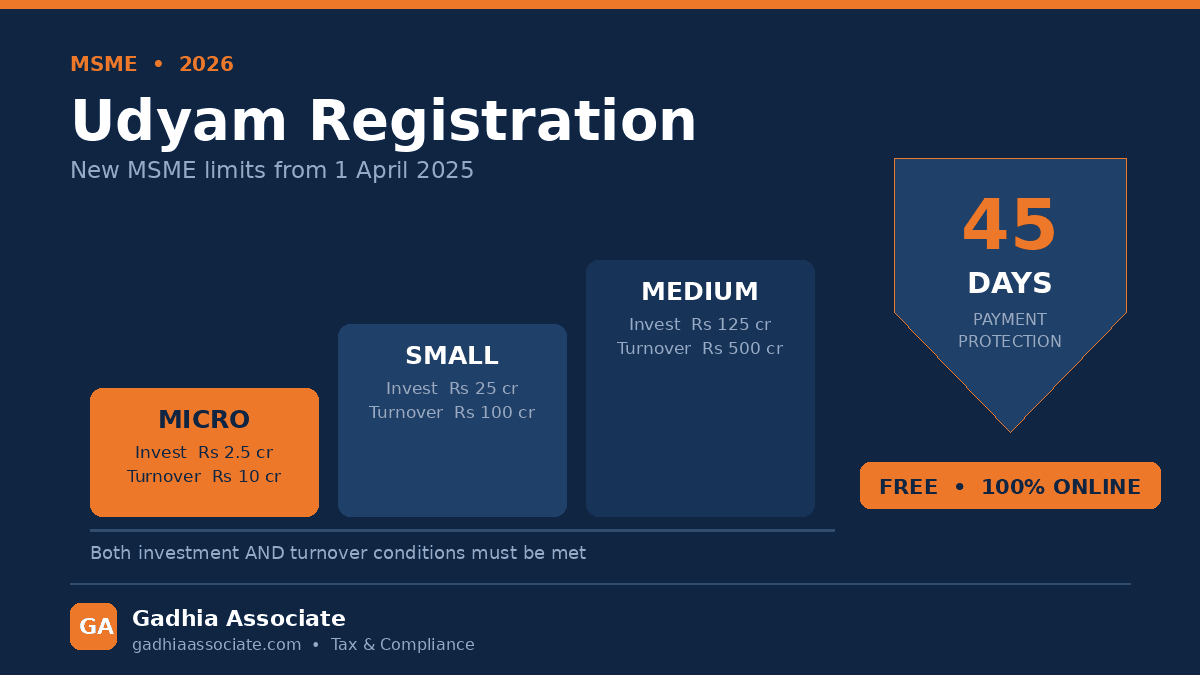
The revised classification took effect on 1 April 2025 and applies through 2026. It raised investment thresholds by two and a half times and turnover thresholds by two times.
A Micro enterprise is one with investment in plant, machinery or equipment up to Rs 2.5 crore and turnover up to Rs 10 crore. A Small enterprise has investment up to Rs 25 crore and turnover up to Rs 100 crore. A Medium enterprise has investment up to Rs 125 crore and turnover up to Rs 500 crore.
Both conditions must be satisfied. An enterprise with investment of Rs 2 crore but turnover of Rs 40 crore is not Micro; the turnover breach pushes it into the Small category. Classification always moves to the higher category if either limit is crossed, and moves down only when both limits fall below the lower category's thresholds. Export turnover is excluded from the turnover computation, which is a meaningful relief for Gujarat's export-oriented units.
What changes at each level matters commercially. Micro and Small enterprises get the full sweep of benefits including the 45-day payment protection and the strongest credit guarantee cover. Medium enterprises are inside the MSME definition for scheme purposes but sit outside the delayed-payment protection, which is reserved for Micro and Small suppliers. So growing from Small to Medium is not a pure upgrade; it quietly costs you a legal remedy against slow-paying buyers.
Do I need to renew my Udyam certificate?
No. Udyam Registration is permanent and there is no renewal, no annual filing and no fee to keep it alive. Classification is auto-updated every year from the enterprise's income tax return and GST return data, and the certificate reflects the updated category automatically. You should log in and update details when your address, bank account, activity or entity type changes, but that is maintenance, not renewal.
Older registrations are a different matter. Udyog Aadhaar Memorandum and EM-I / EM-II registrations are no longer valid. If your business is still relying on a Udyog Aadhaar number in tenders, loan applications or invoices, it carries no legal effect and must be replaced with a fresh Udyam Registration.
For very small informal units with no PAN or GST registration, the Ministry runs the Udyam Assist Platform, through which designated agencies such as banks and NBFCs onboard informal micro enterprises and issue an Udyam Assist Certificate. Those enterprises are treated as Micro enterprises for the purpose of priority sector lending, which brings a large part of the informal economy into the formal credit system.
What are the benefits of Udyam registration?
The benefits are real and mostly financial:
- 45-day payment protection under Section 15 of the MSMED Act, with compound interest on delay under Section 16
- Buyer's disallowance under Section 43B(h) of the Income-tax Act, which denies the buyer a deduction for the purchase until it is actually paid
- MSME Samadhaan portal for filing delayed payment complaints online, referred to the Micro and Small Enterprise Facilitation Council
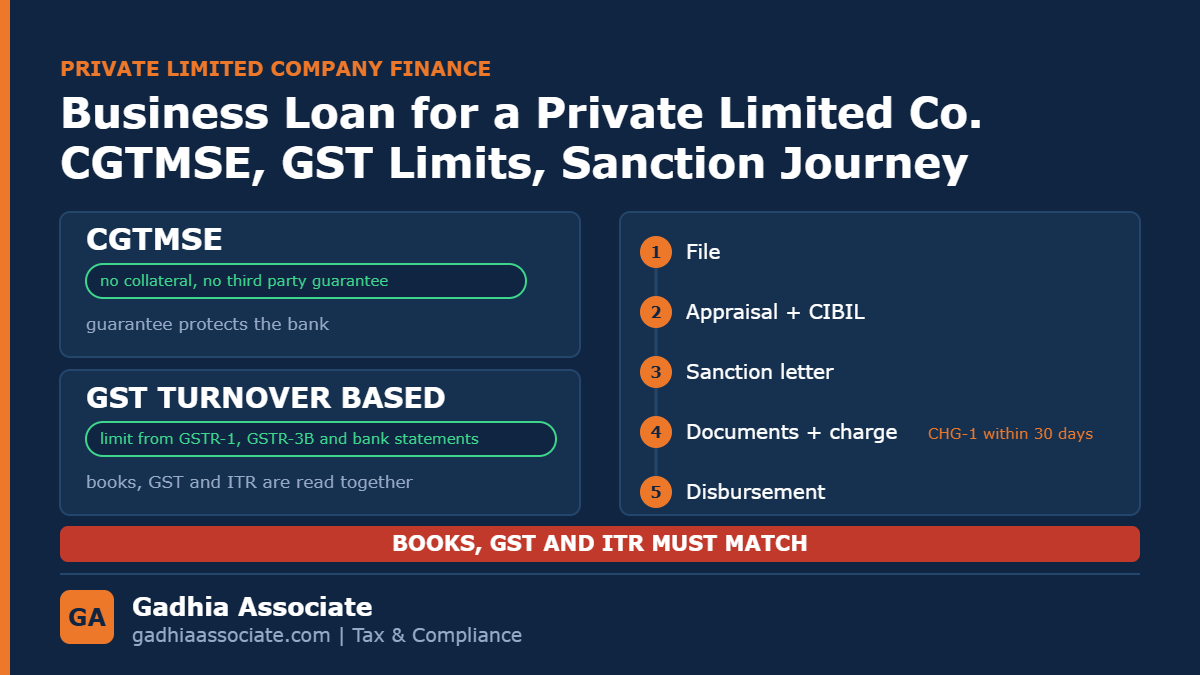
- Collateral-free credit under the CGTMSE guarantee scheme
- Priority sector lending classification with banks, improving access and often pricing
- Preference in public procurement, with tender fee and EMD exemptions and reserved procurement targets for Micro and Small units
- Subsidies and reimbursement schemes covering technology upgradation, ISO and other certification costs, barcoding and trade fair participation, plus state-level incentives in Gujarat
- Access to TReDS, the electronic platform where MSME invoices on large buyers are discounted competitively, converting receivables into cash
What if a buyer does not pay an MSME within 45 days?
Section 15 of the MSMED Act requires a buyer to pay a registered Micro or Small supplier within the agreed period, and in any case within 45 days of acceptance or deemed acceptance of the goods or services. Any agreement to pay later than 45 days is not enforceable beyond that limit.
If the buyer fails, Section 16 makes compound interest with monthly rests payable at a multiple of the RBI notified bank rate, running from the appointed day. That interest is not deductible in the buyer's hands. Separately, Section 43B(h) of the Income-tax Act allows the buyer a deduction for the purchase only in the year of actual payment where payment is not made within the statutory time limit. The supplier can also raise a claim on the MSME Samadhaan portal, which routes it to the Facilitation Council for conciliation and, if that fails, arbitration.
The practical effect is that large buyers now actively ask their vendors for Udyam numbers, because getting the answer wrong costs them a tax deduction. Our detailed article on the MSME 45-day payment rule and Section 43B(h) walks through the timing, the appointed day and how to document acceptance.
An illustrative example
Illustrative only. A Junagadh fabrication unit registered as a Micro enterprise supplies goods worth Rs 10,00,000 to a corporate buyer on 1 May, with acceptance the same day and agreed credit of 60 days. Because the agreement exceeds 45 days, the statutory limit of 45 days prevails and the appointed day falls in mid-June. The buyer pays in October. Two consequences follow. The supplier is entitled to claim compound interest for the delay period under Section 16, computed with monthly rests. And the buyer, having not paid within the limit, cannot claim the Rs 10,00,000 as a deduction in the year of purchase; the deduction shifts to the year of actual payment, increasing the buyer's taxable income for that year. Figures are rounded and simplified for illustration.
A checklist before you file
- Aadhaar of proprietor, managing partner, karta or authorised signatory, with an active linked mobile number
- PAN of the enterprise, matching the entity type
- GSTIN where GST registration is legally required
- Correct NIC code for the main activity, since procurement and scheme eligibility follow it
- Bank account details in the name of the enterprise
- Current investment and turnover figures consistent with your ITR and GST returns
How Gadhia Associate can help
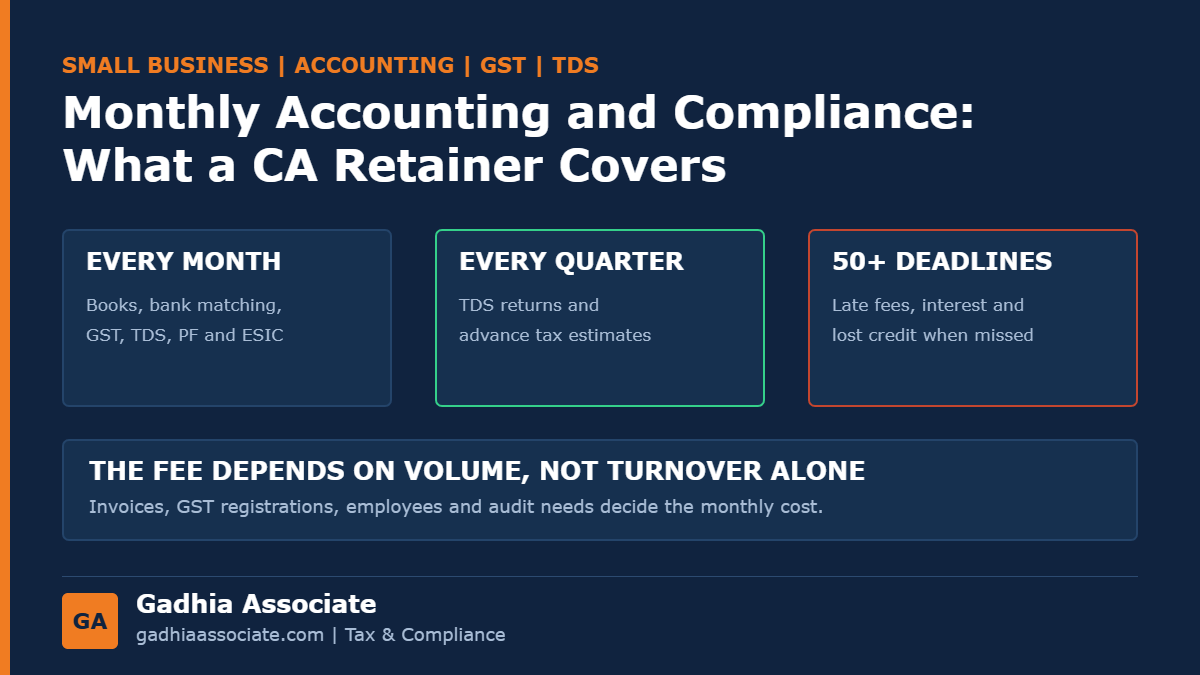
We handle Udyam Registration and updates, classification reviews when a business is close to a threshold, and delayed payment claims under the MSMED Act for clients across Junagadh and Gujarat. If you are still deciding on the form of your business, our Business Structure Advisor tool compares proprietorship, partnership, LLP and private limited on tax, compliance and credit access, and our Company Registration service takes it from there. Our GST Calculator helps you sanity-check the turnover figures Udyam will read from your returns, and our Income Tax services cover the Section 43B(h) implications on both the buyer and supplier side. Book a free consultation and we will get your registration right the first time.
Position as of August 2026. MSME classification, scheme benefits and payment rules change through Ministry of MSME and CBDT notifications. Please confirm the current position with a qualified professional before acting on this article.