UPI Charges Above Rs 2,000 from 15 October 2026: What Shopkeepers Actually Pay, and Why Your UPI Receipts Can Bring a GST or Income Tax Notice
It started with a handwritten sign taped next to the QR code at a grocery counter: "UPI above Rs 2,000 – 0.4% extra." A photo of it went around WhatsApp groups last week, and since then we have had the same three questions from shopkeepers, clinic owners and wholesalers across Junagadh. Will I now pay a charge on every UPI payment? Is this GST on UPI? And, the one that actually matters, will all these UPI receipts bring me a tax notice?
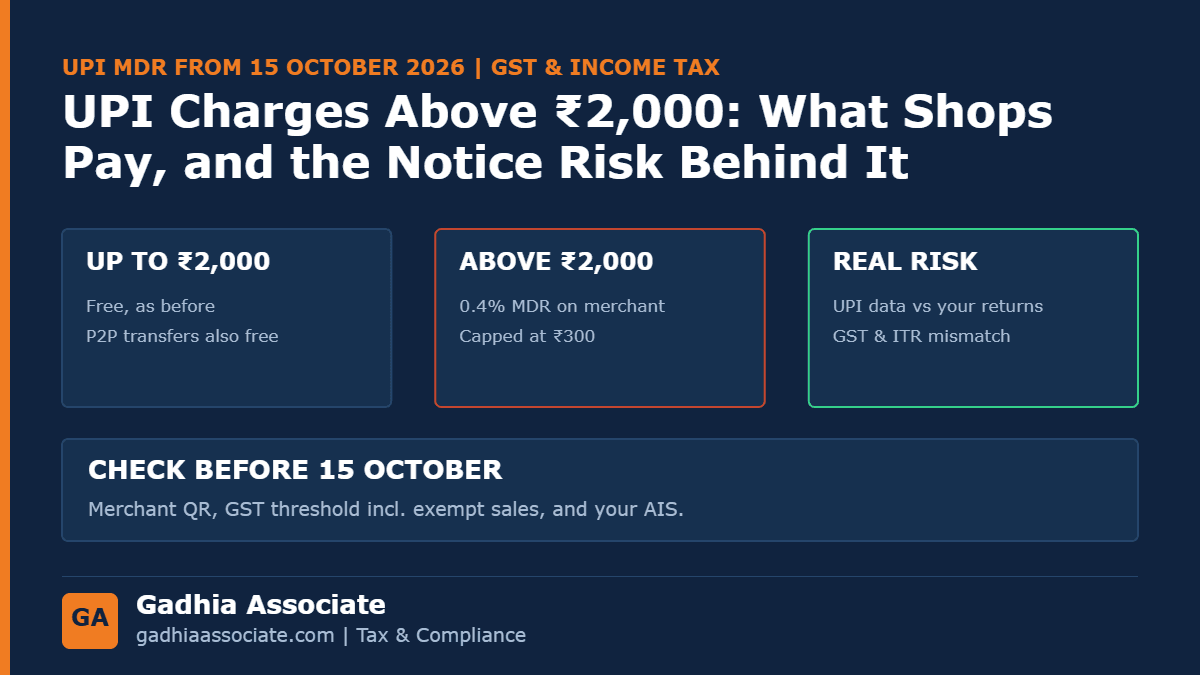
Short answer: From 15 October 2026, NPCI's new framework allows a 0.4% Merchant Discount Rate (MDR) on eligible person-to-merchant UPI payments above Rs 2,000, capped at Rs 300 per transaction. It is a bank charge paid by the merchant, not a tax, and not something you are meant to add to the customer's bill. Payments up to Rs 2,000, person-to-person transfers, and small merchants receiving up to Rs 1 lakh a month on UPI stay free. The charge is small. The bigger issue is that every UPI rupee you receive is now a clean, date-stamped record that the GST and income tax departments can match against what you have declared.
What exactly changes on 15 October 2026?
On 14 September 2026 the Finance Ministry notified that UPI payments up to Rs 2,000 remain protected from charges. On 15 September, NPCI issued the MDR framework for higher-value merchant payments. In plain terms:
- Person-to-merchant (P2M) UPI payments above Rs 2,000 attract MDR of 0.4%
- The MDR is capped at Rs 300 per transaction, which is reached at Rs 75,000
- Payments of Rs 2,000 or less stay free
- Person-to-person (P2P) transfers between individuals stay free
- Small merchants receiving up to Rs 1 lakh a month through a UPI QR code stay at zero MDR
- Certain sectors have their own rates, such as a flat Rs 5 per transaction for railways, fuel, telecom, insurance and utilities
A petition has also been filed in the Supreme Court challenging the government's power to allow these charges. Until the court says otherwise, plan on the basis that the framework applies from 15 October.
How much will it actually cost my shop?
Less than most people fear. Take three examples:
- A customer pays Rs 4,000 for a school uniform order: MDR is Rs 16
- A retailer pays a wholesaler Rs 50,000 by UPI: the wholesaler's MDR is Rs 200
- A customer pays Rs 1,20,000 for a refrigerator: MDR hits the cap of Rs 300
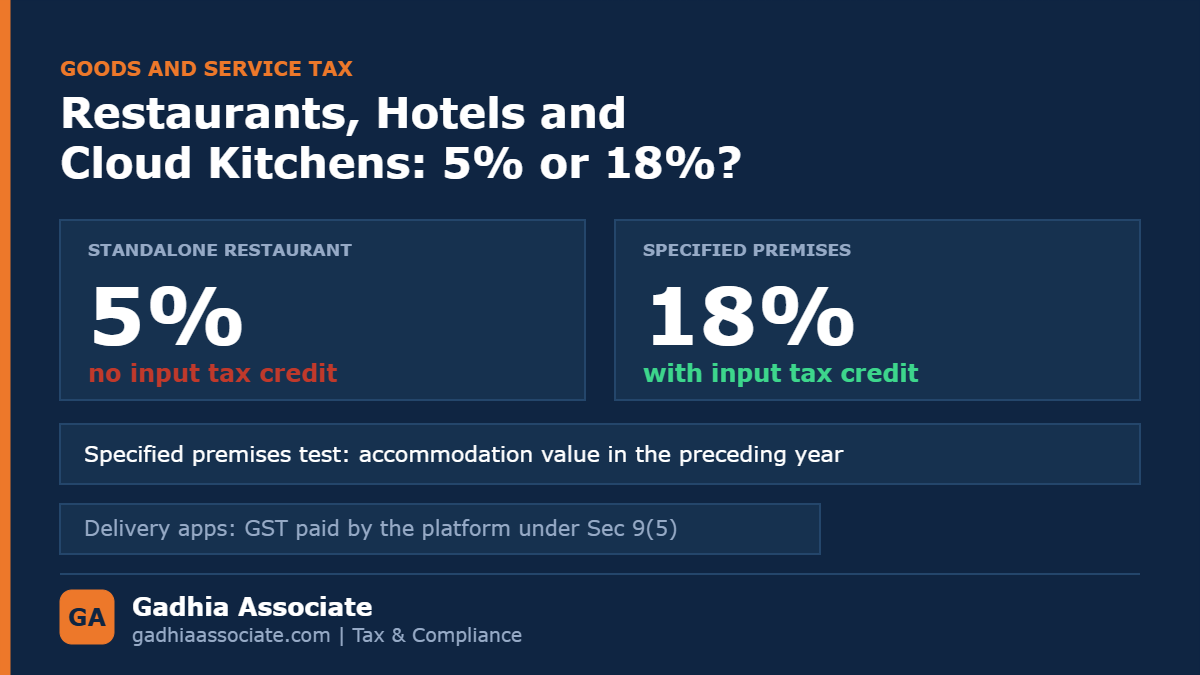
Now look at your own month. Suppose a hardware shop in Keshod receives Rs 12 lakh a month on UPI, and roughly half of that comes in payments above Rs 2,000. The MDR on Rs 6 lakh at 0.4% is Rs 2,400 a month, or about Rs 28,800 a year. Bank charges normally carry 18% GST, so expect GST on the MDR invoice as well, just as you already see on card machine charges. If you are GST registered, that GST is usually available as input tax credit.
Rs 28,800 a year is real money for a small shop. But it is also a fully deductible business expense, and it is far smaller than what a single wrong tax position can cost you.
Is this GST on UPI payments?
No. This is the most common confusion, and it is worth being clear about it. The Finance Ministry has said publicly that there is no proposal to levy GST on UPI transactions above Rs 2,000. MDR is a fee within the payments ecosystem, shared between banks, the payment app and the network. It is not collected by the government.
Where GST does come in is the other way round. Your UPI receipts are your sales. If those sales cross the GST threshold, you need to be registered and pay GST on them, whether the customer paid in cash, by card or by UPI.
Can I pass the 0.4% on to my customer?
The government has been explicit that MDR is a charge within the merchant payment system and not a charge on customers. Your agreement with the bank or payment provider that gave you the QR code will usually say the same. Adding a visible "UPI surcharge" line invites complaints, can breach that agreement, and draws exactly the kind of attention you do not want. If your margins genuinely cannot absorb it, the honest route is to revisit your prices, not to add a separate charge at the counter.
Should I switch to my personal UPI ID to avoid the charge?
We are already hearing this idea, and it is a bad one. Personal-to-personal transfers are free, so some shopkeepers are thinking of putting a personal QR code on the counter. Three problems follow:
- Banks watch savings accounts that receive dozens of payments a day from strangers. They can restrict or freeze the account for commercial use, and unfreezing it takes weeks.
- Your business income gets mixed with personal money. When a notice comes, you have to explain every credit, and a mixed account makes that painful.
- It looks like an attempt to keep sales out of the books. If the department later matches those credits to your business, the explanation "I used my personal ID to save 0.4%" does not help your case.
Saving Rs 16 on a Rs 4,000 sale is not worth a frozen account or a disputed turnover figure.
Can UPI receipts really trigger a GST notice?
Yes, and this is not a theory. In July 2025, the Karnataka commercial taxes department sent notices to thousands of small traders, vegetable sellers and bakery owners based on the UPI receipts visible in their accounts. Many had never registered for GST because they believed they were small. Their UPI data showed otherwise. After protests, the state government waived old dues for many of them, but the message for every other state was clear: UPI data is available, and departments know how to use it.
For goods, the GST registration threshold in Gujarat is Rs 40 lakh of aggregate turnover in a financial year. For services, it is Rs 20 lakh. Rs 40 lakh sounds large, but it is only about Rs 3.3 lakh a month. A busy kirana store, a mobile shop or a pharmacy can cross that easily without realising it.
Here is the trap many people miss. Aggregate turnover includes exempt sales. If you sell milk, fresh vegetables or unbranded grain (exempt) alongside packaged food, soaps and cold drinks (taxable), the exempt sales still count towards the threshold. A shop doing Rs 25 lakh of exempt sales and Rs 18 lakh of taxable sales has crossed Rs 40 lakh and needs to register, even though its taxable sales alone are well below.
And an income tax notice?
This is where UPI data hurts more quietly. Banks and reporting entities send high-value information to the income tax department, and it shows up in your Annual Information Statement (AIS). When your return shows a small turnover but your bank credits tell a much bigger story, the system flags the gap. That is how a scrutiny notice or a reassessment notice usually begins.
There is a positive side for honest businesses. Under the presumptive taxation scheme (earlier Section 44AD, now Section 58 of the Income-tax Act, 2025), profit on digital receipts, which includes UPI, is taken at 6% of turnover instead of 8% for cash. And the turnover limit for the scheme goes up from Rs 2 crore to Rs 3 crore when cash receipts are not more than 5% of the total. So more UPI, properly declared, can actually reduce your tax and keep you out of audit.
What should a shopkeeper do before 15 October?
- Check which QR code you are using. Is it a merchant QR from your bank or payment app, or a personal ID? Move business collections to a proper merchant QR linked to your current account.
- Add up last year's UPI receipts. Download statements from your bank and payment apps for FY 2025-26 and total the business credits. Compare this with the turnover in your ITR.
- Include exempt sales when checking the GST threshold. If the total is near or above Rs 40 lakh (goods) or Rs 20 lakh (services), talk to someone now, not after a notice.
- Consider the composition scheme. Traders with turnover up to Rs 1.5 crore can pay GST at 1% of turnover with quarterly payment and simpler filing, instead of the regular scheme.
- Look at your AIS. Log in to the income tax portal and check what is already reported against your PAN. If something is wrong or duplicated, file feedback.
- Keep MDR invoices. Download the monthly MDR and GST invoice from your payment provider. It is a deductible expense and, if registered, an ITC claim.
I have been under-reporting. What now?
Many small business owners are in this position without any bad intention. They started small, business grew through UPI, and nobody told them the rules had moved. The worst thing to do is wait for the department to write first.
If you should have been registered for GST earlier, registering now and paying tax on your sales going forward puts you in a far stronger position than being found through a data match. On the income tax side, if last year's return understated income, an updated return (ITR-U) lets you correct it by paying tax, interest and an additional amount, which is still much cheaper than penalties and prosecution risk that follow a notice. Every case is different, and the order in which you fix things matters, so take advice before you file anything.
What we do for you
- Reconcile your bank and UPI statements with your books and your filed returns
- Tell you clearly whether you have crossed the GST threshold, including exempt sales
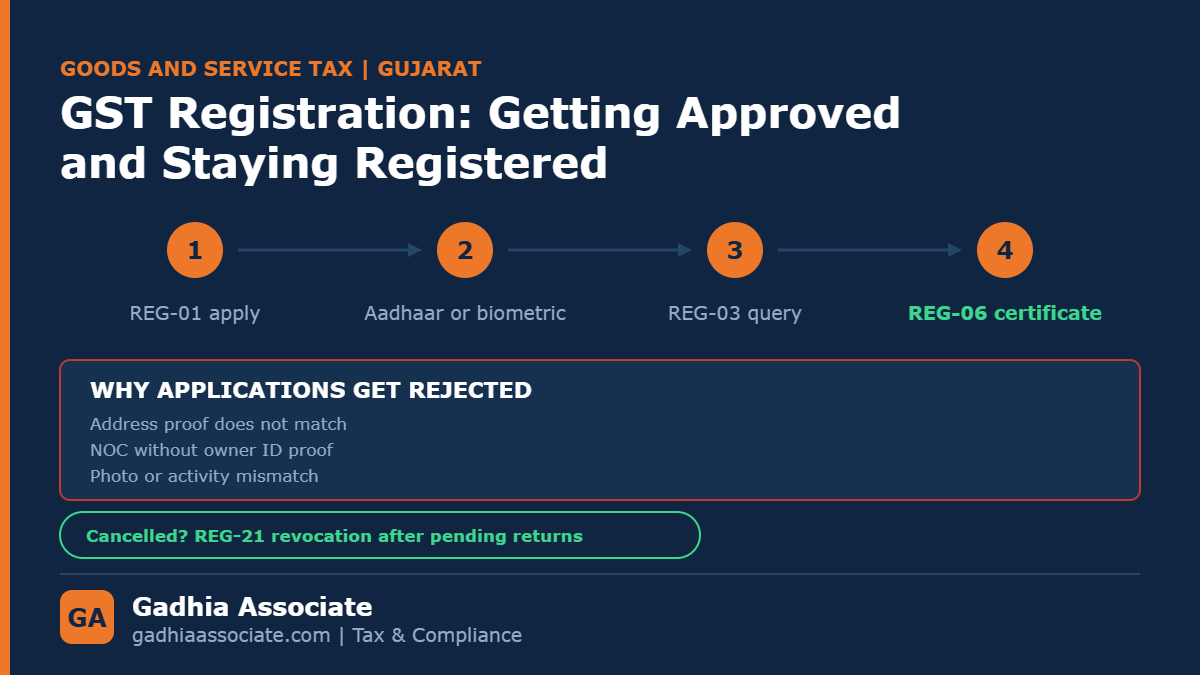
- Complete GST registration, including biometric Aadhaar authentication and document support
- Advise on composition versus regular GST, based on your actual margins and customers
- Check your AIS and file feedback where entries are wrong
- File your income tax return under the presumptive scheme where it suits you, or with proper books where it does not
- Prepare and file an updated return (ITR-U) where past income needs correcting
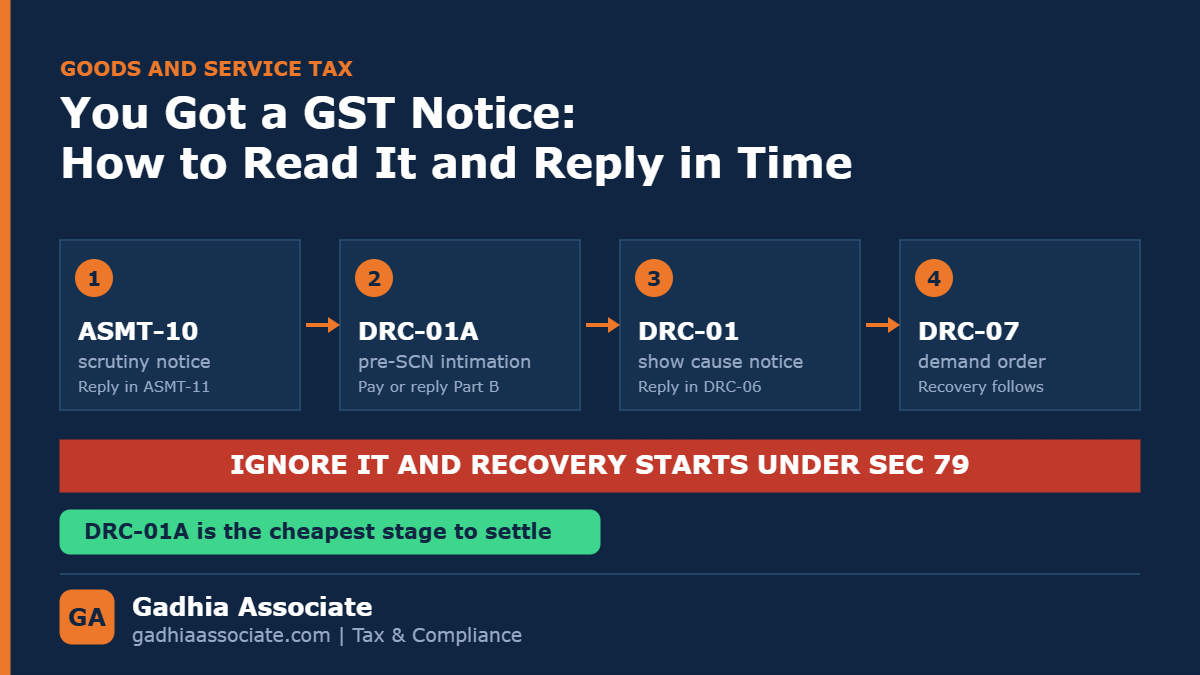
- Draft replies to GST or income tax notices triggered by bank or UPI data
- Handle monthly GST returns and bookkeeping so this never becomes a problem again
Gadhia Associate has been in practice since 2007 and has handled work for over 7,000 clients across Saurashtra and Gujarat, with a 5.0 Google rating from more than 100 reviews. Shopkeepers, wholesalers and small manufacturers from Junagadh, Keshod, Veraval, Gir Somnath, Amreli and Porbandar come to our Junagadh office, where same-day appointments are available. The work can equally be done digitally for businesses anywhere in India. Fixed-fee and monthly plans are available.
Before 15 October, get a simple check done on your UPI receipts and GST position. Call or WhatsApp +91 82005 28355, or visit our Junagadh office. The first consultation is free.
Frequently asked questions
Will I pay a charge on a UPI payment of Rs 2,000 or less?
No. Under the framework notified in September 2026, person-to-merchant payments up to Rs 2,000 remain free. The 0.4% MDR applies only to eligible payments above Rs 2,000.
Does the customer pay the 0.4%?
No. MDR is paid by the merchant through the bank or payment provider. It is not meant to be added to the customer's bill.
Is there any cap on UPI MDR?
Yes. The MDR is capped at Rs 300 per transaction, which is reached at a payment of Rs 75,000. Payments larger than that still attract only Rs 300.
Is GST charged on UPI transactions above Rs 2,000?
No. The Finance Ministry has said there is no proposal to levy GST on UPI transactions. GST may apply to the MDR fee itself, as it does to other bank charges, but not to the payment amount.
I am a small shop. Am I exempt from MDR?
Small merchants who receive up to Rs 1 lakh a month through a UPI QR code remain at zero MDR. Check with your bank or payment app how your QR code is classified.
Can UPI payments lead to a GST notice even if I am not registered?
Yes. If your UPI and bank receipts show turnover above the registration threshold, the department can issue a notice asking why you did not register, and demand tax with interest and penalty.
Is MDR a deductible expense for income tax?
Yes. It is a normal business expense if you maintain books. If you declare income under the presumptive scheme, your deemed profit already covers all expenses, so no separate deduction is claimed.
Position as of 21 September 2026. The UPI MDR framework has been challenged before the Supreme Court and may be clarified or changed. GST thresholds, presumptive rates and procedures change through notifications, and the Income-tax Act, 2025 has renumbered income tax provisions from 1 April 2026; the older section numbers are mentioned because that is how people still search for them. Confirm the current position before acting.