GST Notice Reply 2026: How to Respond to ASMT-10, DRC-01 and DRC-03 Without Paying a Penalty
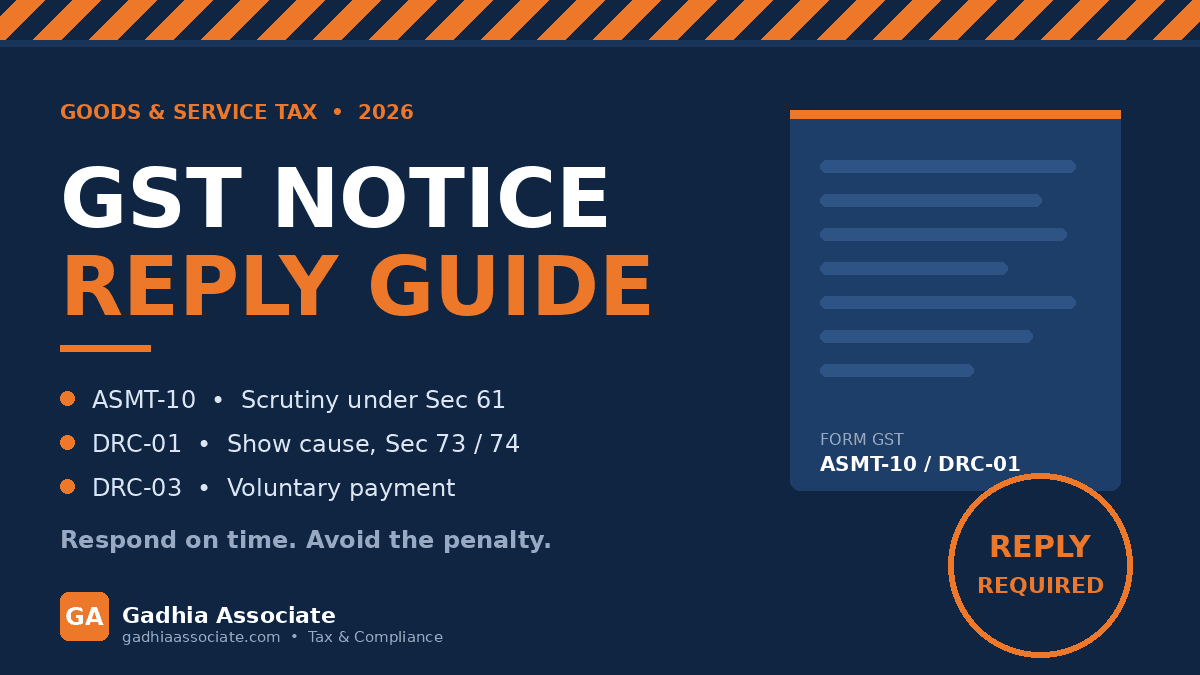
A GST notice reply filed on time, with the right form and the right supporting documents, is usually the difference between closing a matter quietly and paying tax with interest and penalty. ASMT-10 is a scrutiny notice asking you to explain a discrepancy, DRC-01 is a formal show cause notice raising a demand, and DRC-03 is the form you use to pay voluntarily. Understanding which one you have received tells you exactly how serious the matter is and how much time you have.
What is an ASMT-10 notice?
Form GST ASMT-10 is issued under Section 61 of the CGST Act when an officer scrutinises your returns and finds a discrepancy. It is the mildest stage of GST enforcement. The officer is not yet alleging fraud or confirming a demand; he is asking you to explain a difference he has noticed, most commonly between GSTR-1 and GSTR-3B, between GSTR-3B and GSTR-2B on input tax credit, between your e-way bill data and declared outward supply, or between your GST turnover and the turnover in your income tax return.
You reply in Form GST ASMT-11, normally within 30 days of service unless the notice specifies otherwise. If your explanation is accepted, the officer drops the proceeding by issuing ASMT-12 and the matter ends there. That is why an ASMT-10 deserves a serious, document-backed reply rather than a one-line response.
How do I reply to ASMT-10?
- Read the notice carefully and identify each discrepancy separately, with the tax period and amount.
- Pull the underlying data: GSTR-1, GSTR-3B, GSTR-2B, your books, invoices, e-way bills and ledgers for the period.
- Prepare a reconciliation statement that explains every difference figure by figure.
- Where the difference is genuinely payable, pay through DRC-03 and reference that payment in the reply.
- File the reply in ASMT-11 on the GST portal within the time allowed, attaching the reconciliation and supporting documents.
- Keep an acknowledgement of the filed reply for your records.
What is a DRC-01 notice and how is it different?
DRC-01 is a show cause notice issued when the officer has already formed a view that tax is short paid, not paid, wrongly refunded, or input tax credit is wrongly availed or utilised. It is issued under Section 73 in non-fraud cases and under Section 74 where suppression of facts, wilful misstatement or fraud is alleged. Unlike ASMT-10, a DRC-01 carries a proposed demand of tax, interest and penalty, and it starts a formal adjudication.
The comparison is straightforward. ASMT-10 is scrutiny under Section 61, reply in ASMT-11, generally 30 days, no demand confirmed yet. DRC-01 is a show cause notice under Section 73 or 74, reply in DRC-06, with a demand proposed. DRC-03 is not a notice at all; it is the payment form used to discharge liability voluntarily at any of these stages. Businesses often lose cases simply because they treated a DRC-01 with the same casualness as a scrutiny query.
How many days do I have to reply to DRC-01?
The reply period is stated in the notice itself and is typically 30 days from the date of service. Under Section 73 and Section 74 the law also requires the show cause notice to be issued a specified number of months before the deadline for passing the order, which is why officers are strict about reply timelines. If you need more time, file a written request for adjournment before the due date rather than letting the date pass. Do not assume an extension will be granted automatically.
When should I use DRC-03?
Use DRC-03 when you accept a liability and want to pay it voluntarily, either before any notice is issued, after receiving an ASMT-10, or after a DRC-01. Paying early matters financially. Under Section 73, where tax and interest are paid before the show cause notice is issued, no penalty is generally leviable, and where payment is made within the prescribed period after the notice, the penalty exposure is significantly reduced. Under Section 74, which deals with fraud cases, the penalty is far heavier and the reductions for early payment are smaller. The exact percentage depends on the section and the stage of payment, so confirm the applicable relief before you pay.
Two practical cautions. First, always select the correct cause of payment and the correct tax period in DRC-03; a wrongly tagged payment creates fresh problems. Second, a DRC-03 payment does not by itself close the proceeding. You must still file the reply and reference the payment.
What happens if I ignore a GST notice?
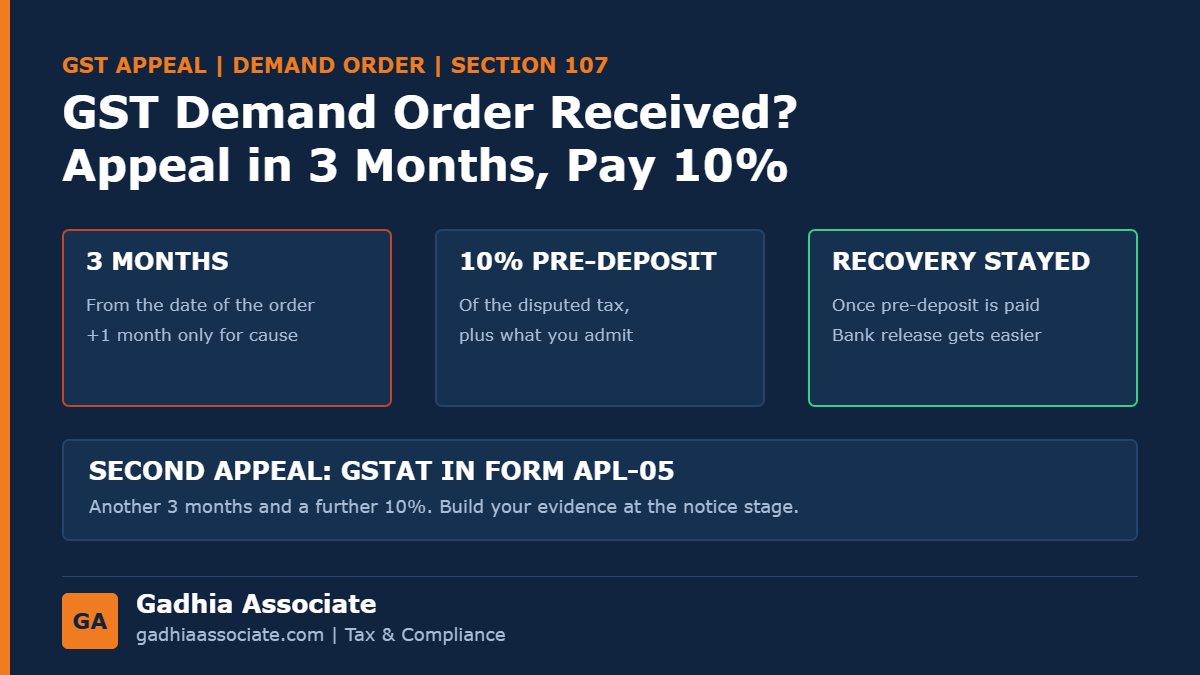
Nothing good. If you do not reply to an ASMT-10, the officer can proceed to assessment or move straight to a demand under Section 73 or 74. If you do not reply to a DRC-01, the officer passes an order in DRC-07 on a best judgement basis, confirming the demand with interest and penalty, and that order becomes recoverable. Recovery can extend to attachment of bank accounts and blocking of the electronic credit ledger. Appealing later costs more, requires a pre-deposit, and puts you on the back foot. A timely reply is always the cheaper option.
Can a GST notice be issued after 3 years?
For non-fraud cases under Section 73, the demand is time-barred once the prescribed period from the due date of filing the annual return for that financial year has elapsed, and that outer limit is longer where fraud, suppression or wilful misstatement is alleged under Section 74. Because the limitation periods differ between the two sections and have been amended over time, limitation is one of the strongest defences available, and it should always be checked first when a notice relates to an older period. Similarly, an ASMT-10 cannot meaningfully be issued once the demand period for the relevant year has expired.
Building a reply that actually works
Answer every allegation in the notice, in the order it is raised. Attach the reconciliation, ledgers and invoices rather than making bare assertions. Where a supplier's default caused an ITC mismatch, produce the invoice, proof of payment and evidence of goods or services received. Where the difference is timing rather than tax, show the subsequent period where it was reported. Keep the tone factual. Our GST Calculator helps you compute tax and interest workings quickly while preparing the reconciliation, and our Capital Gain Tax Calculator is useful when a notice touches asset sales that also affect your income tax position. For a broader view of return filing, registration and compliance work, see our GST Services and Income Tax Services pages.
How Gadhia Associate Can Help
Gadhia Associate is a tax and compliance firm in Junagadh, Gujarat, working with traders, manufacturers, service providers and professionals across India. We review the notice, check limitation, prepare the reconciliation, draft and file the ASMT-11 or DRC-06 reply, advise whether a DRC-03 payment reduces your exposure, and represent you before the officer. If a GST notice has landed on your portal, book a free consultation before the reply deadline; the earlier we see it, the more options you have.
Position stated as of August 2026. GST provisions, forms, time limits and penalty rates change through CBIC and CBDT notifications, circulars and portal updates. Please verify the current position or consult us before acting on this article.