GST on Homestays and Resorts Near Sasan Gir: 5% or 18%, When You Must Register, Online Bookings and Income Tax
Gir reopens for lion safaris on 16 October, and homestay and resort owners around Sasan and Talala all ask the same thing: how much GST on a room?
Take a typical four-room homestay near Sasan. Half the bookings come through travel apps, a few through a Rajkot travel agent, and the Diwali and New Year rush arrives as walk-ins who pay in cash or by UPI. Nobody registered for GST, because "the app pays the GST". By March, all the bookings together have crossed Rs 20 lakh, one cottage was sold at Rs 8,500 a night over New Year, and the owner has no idea that both facts changed his tax position.
This article is for owners of homestays, farm stays, guest houses and small resorts in the Gir belt who want to get it right before the season, not after a notice.
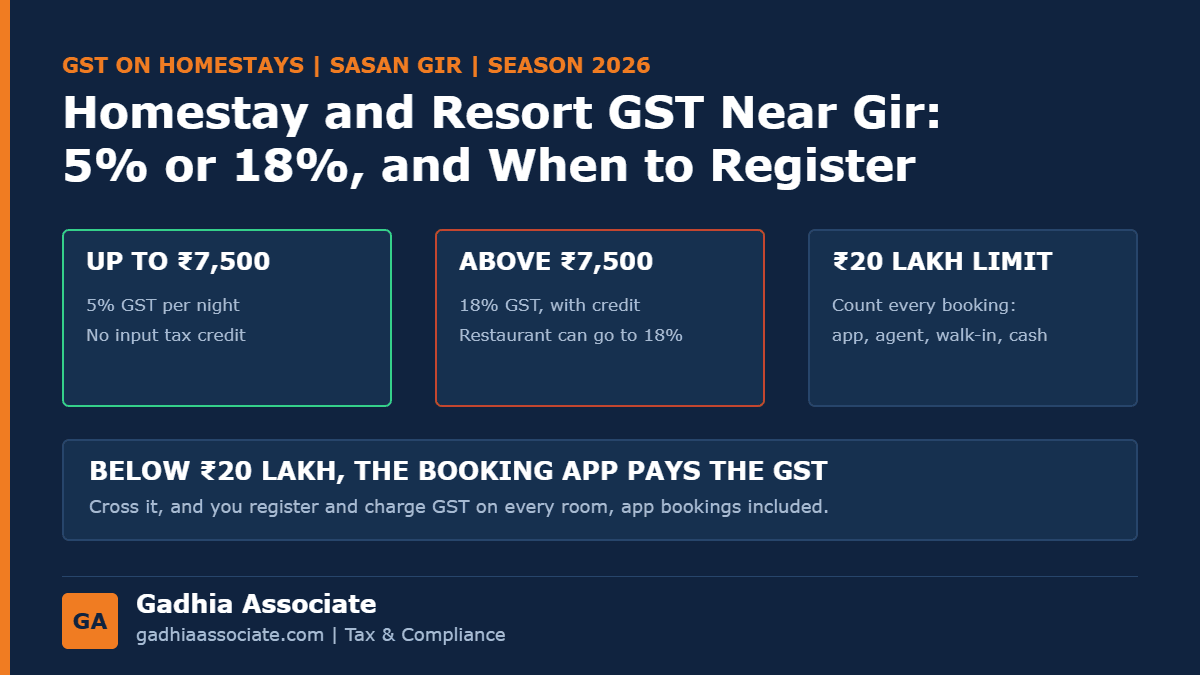
Short answer: Since 22 September 2025, rooms with a tariff up to Rs 7,500 per night attract GST at 5% without input tax credit, and rooms above Rs 7,500 attract 18% with credit. You must register for GST once your total turnover crosses Rs 20 lakh in a financial year, counting direct, walk-in, agent and online bookings together. Below that limit, the booking platform pays GST on the rooms it sells for you, and selling online alone does not force you to register. Income from a homestay that serves guests is business income, not rent, and the presumptive scheme under Section 44AD often suits smaller owners.
What is the GST rate on homestay and resort rooms in 2026?
- Up to Rs 7,500 per unit per day: 5%, with no input tax credit. This is compulsory. You cannot choose to pay 18% and claim credit instead.
- Above Rs 7,500 per unit per day: 18%, with input tax credit.
The test is the actual price you charge for that room for that night, after discounts, not a rate printed on a card. Until 21 September 2025, rooms up to Rs 7,500 were taxed at 12% with credit. The new 5% rate is good for your guests, but it means the GST you pay on furniture, linen, air conditioners, renovation work and the commission charged by booking platforms can no longer be claimed back. It becomes part of your cost.
The Rs 7,500 line: price your rooms with the tax in mind
Look at what happens to the guest's bill on either side of the line:
- Cottage at Rs 7,500 a night: GST at 5% is Rs 375. The guest pays Rs 7,875.
- Cottage at Rs 7,600 a night: GST at 18% is Rs 1,368. The guest pays Rs 8,968.
For Rs 100 more in room rent, the guest pays Rs 1,093 more. Unless your property is priced well above the line and you have significant credit to claim, a room tariff just over Rs 7,500 costs you more than it earns. And the credit is smaller than many owners expect: GST on constructing the building itself is blocked even at 18%, so the credit mainly covers furniture, fittings, equipment and services.
Two more points catch resorts every season:
- Packages. If you sell room, all meals and a jeep transfer at one price, the whole package is generally treated as a supply of accommodation, and the department can apply the Rs 7,500 test to the package price. Show the room tariff separately where it genuinely is separate. Safari permits you book on the guest's behalf can be kept out of your value only if you recover them at actual cost and show them separately as a pure agent.
- One expensive week. If even one unit was sold above Rs 7,500 in a financial year, your premises become "specified premises" for the next year. Your restaurant must then charge 18% with credit instead of 5% without credit, on every plate. We explained this rule in detail in our article on GST for restaurants and hotels.
When does a homestay or resort have to register for GST?
In Gujarat, a supplier of services must register once aggregate turnover crosses Rs 20 lakh in a financial year. Aggregate turnover means everything: rooms, food, bonfire and cultural evenings, laundry, and bookings from every channel, including walk-ins, agents and online platforms.
The common belief that "the app pays the GST" is only half true. Under Section 9(5) of the CGST Act, an online platform such as MakeMyTrip, Booking.com or Airbnb pays the GST on accommodation it sells for you, but only while you are not liable to register. Once your total turnover crosses Rs 20 lakh, the responsibility moves to you. You register, charge GST on every booking, including the ones sold on the platforms, and the platform then collects TCS of 0.5% from your payouts, which you can use to pay your GST.
Two situations need a closer look:
- Selling online below the limit. A homestay below Rs 20 lakh does not have to register only because it sells through a platform. Voluntary registration is possible, but it brings regular returns and invoicing rules with it, so take advice on your numbers first.
- Farm produce. Many owners around Talala also sell Kesar mangoes or other produce from their land. How those sales interact with the Rs 20 lakh limit depends on your facts, so do not assume you are below the limit without checking. Our guide to when GST registration is required covers the general rules.
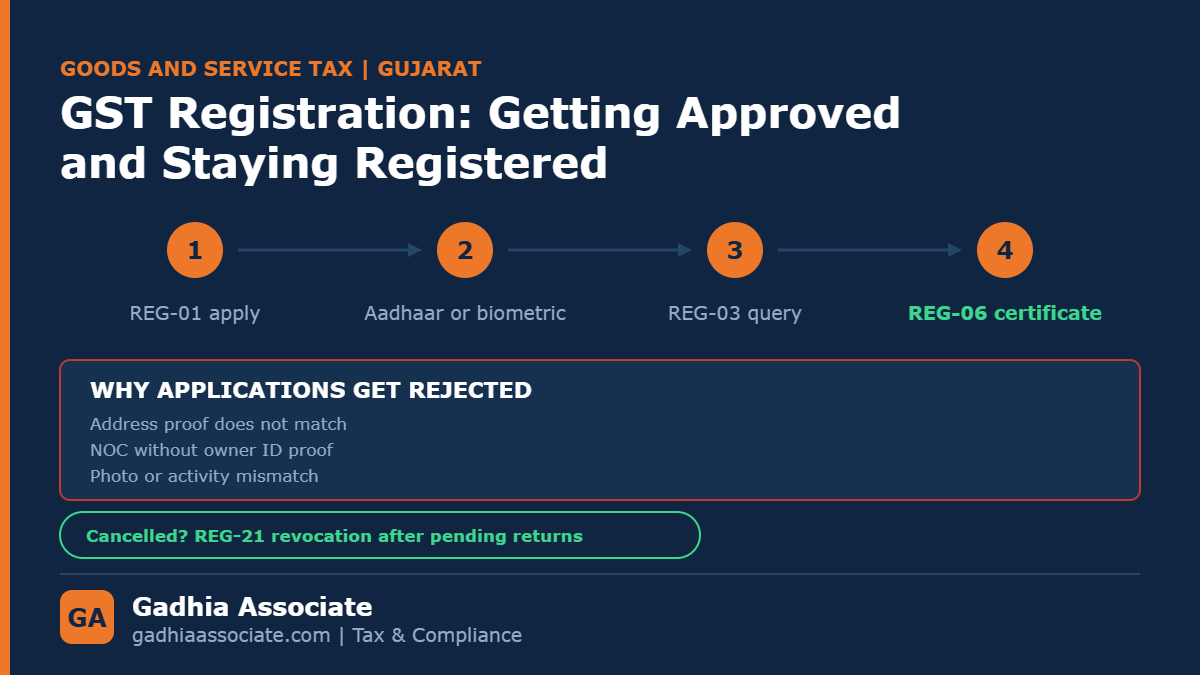
Once registered, you issue invoices with your GSTIN and file returns monthly or quarterly. Because rooms under Rs 7,500 are taxed at 5% without credit, the returns are fairly simple. The composition scheme rarely helps a homestay, because for service providers it means 6% on turnover, which is more than the 5% on rooms.
And one rule without exceptions: if you are not registered, you cannot charge GST on your bill. Collecting "GST" from guests without a GSTIN is the fastest way to turn a small matter into a serious one.
What do the booking platforms deduct, and what must you report?
- GST TCS at 0.5%: deducted from your payouts if you are registered. It reaches your electronic cash ledger once you accept it on the GST portal, and it can be used to pay your GST. Unclaimed TCS is money left on the table.
- Income tax TDS at 0.1%: deducted by the platform on your gross bookings (the old Section 194-O). It appears in your Form 26AS and AIS, and you claim it in your income tax return.
- Commission with 18% GST: the platform's commission invoice carries 18% GST. If your rooms are at 5%, this GST is a cost, not a credit.
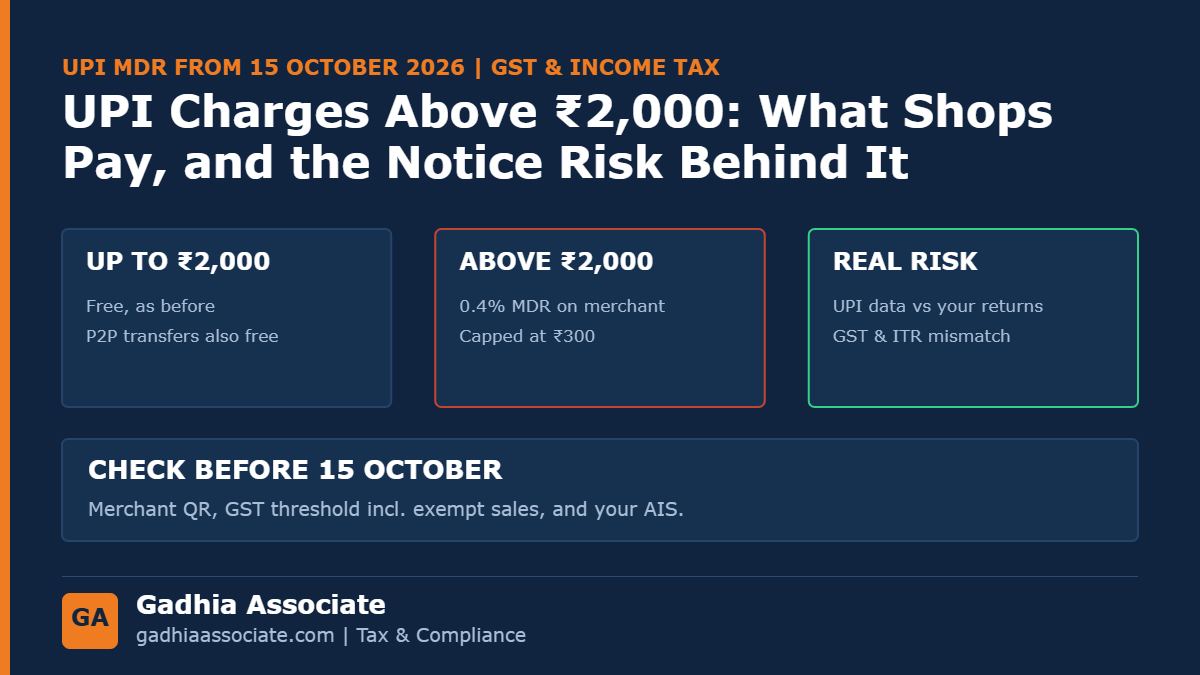
Keep in mind what the department can see. Platform payouts, the TDS they deduct and your UPI receipts all show up in your Annual Information Statement. Declaring only the cash you remember is no longer an option. We wrote about how UPI receipts can bring a GST or income tax notice.
Which other registrations matter in Gujarat?
- Gujarat Tourism homestay registration. Under the state's homestay policy, an owner who lives in the same house and offers one to six rooms (up to 12 beds) can register with the Commissioner of Tourism. Registered homestays are charged residential rates for electricity, property tax and water, and the registration is renewed every two years. Check the current policy on the Gujarat Tourism website before you apply.
- Foreign guests. Details of every foreign guest must be reported online through the Form C system within 24 hours of arrival. Gir gets a steady flow of foreign wildlife tourists, and this is often missed by smaller properties.
- Food. If you serve food, you need FSSAI registration, or a licence once turnover crosses Rs 12 lakh.
- Land and building. Cottages on agricultural land generally need non-agricultural permission for commercial use, and construction near the sanctuary is subject to forest and eco-sensitive zone rules. These are outside the scope of this article, but check them before you invest in new rooms.
How is homestay and resort income taxed?
Letting a house to one tenant is income from house property, with a flat 30% deduction. Running a homestay is different. When you provide meals, housekeeping and services to guests who stay a few nights, the income is business income. Showing homestay receipts as "rent" and claiming the 30% deduction is a common error, and an easy one for the department to question. The same applies to cottages on a farm: income from letting rooms to tourists is not agricultural income, even though the land is agricultural.
For smaller owners, the presumptive scheme under Section 44AD is usually the simplest route. Individuals, HUFs and partnership firms (but not LLPs) with turnover up to Rs 2 crore, or Rs 3 crore where cash receipts are within 5%, can declare 6% of digital receipts and 8% of cash receipts as income, without maintaining detailed books. Our article on presumptive taxation under Section 44AD explains the conditions and the five-year lock-in.
An example: a homestay near Sasan has turnover of Rs 18 lakh in a year, of which Rs 14 lakh comes through bank transfers, UPI and platform payouts and Rs 4 lakh in cash. The minimum presumptive income is 6% of Rs 14 lakh plus 8% of Rs 4 lakh, which is Rs 1.16 lakh. The owner can declare more, but no books of account or audit are needed at this level. Moving more guests to UPI directly lowers the presumptive rate that applies.
Larger resorts, especially those run as partnership firms, LLPs or companies, need proper books, depreciation on buildings and furniture, and a tax audit once turnover crosses Rs 1 crore (Rs 10 crore if cash receipts are within 5%). And for wedding and event bookings, remember the cash limit: you cannot accept Rs 2 lakh or more in cash from one person for one event, or the penalty equals the full amount received. See our guide to cash transaction limits.
Mistakes to fix before the season opens
- Counting only platform bookings towards the Rs 20 lakh limit and ignoring walk-in, agent and cash bookings.
- Charging 12% or 18% on rooms under Rs 7,500 out of old habit.
- Charging "GST" to guests without being registered.
- Pricing a peak-season room just above Rs 7,500 and turning the whole property into specified premises for next year.
- Claiming input tax credit on renovation and furniture while charging 5% on rooms.
- Not claiming the TCS and TDS deducted by booking platforms.
- Showing homestay income as rent with a 30% deduction.
- Issuing no bill at all to walk-in guests.
What we do for you
- Check whether you need GST registration this season, counting every booking channel
- Register you for GST and set up invoices that apply 5% or 18% correctly
- Advise on room and package pricing around the Rs 7,500 line and the specified premises rule
- File your GST returns and claim the TCS deducted by booking platforms
- File your income tax return under the presumptive scheme where it suits you, or with proper books where it does not
- Reconcile platform payouts, TDS and UPI receipts with your AIS before the department does
- Advise on the right structure, whether proprietorship, firm, LLP or company, when you add cottages or partners
Gadhia Associate has been in practice since 2007 and has handled work for over 7,000 clients across Saurashtra and Gujarat, with a 5.0 Google rating from more than 100 reviews. Homestay, hotel and resort owners from Sasan Gir, Talala, Visavadar, Mendarda, Junagadh and Veraval can meet us at our Junagadh office, where same-day appointments are available, or work with us entirely online during the busy season. Fixed-fee and monthly plans are available.
The season opens on 16 October. Get your GST position and room pricing sorted before the first safari booking. Call or WhatsApp +91 82005 28355. The first consultation is free.
Frequently asked questions
What is the GST rate on homestays in 2026?
5% without input tax credit for rooms with a tariff up to Rs 7,500 per night, and 18% with credit above Rs 7,500. These rates apply from 22 September 2025.
Is GST registration compulsory for a homestay listed on Airbnb or MakeMyTrip?
Not if your total turnover from all channels is below Rs 20 lakh in the year. The platform pays GST on the bookings it sells for you. Once you cross Rs 20 lakh, you must register and pay GST on all bookings yourself.
Can I charge GST to guests without a GST registration?
No. Only a registered person can charge GST, and it must be paid to the government through your returns.
Can a resort claim input tax credit?
Not on rooms taxed at 5%. On rooms above Rs 7,500 taxed at 18%, credit is available on furniture, equipment and services, but not on the construction of the building.
Is income from cottages on my farm agricultural income?
No. Income from letting rooms or cottages to tourists is business income, even when the cottages stand on agricultural land.
What GST applies to the restaurant in my resort?
5% without credit, unless your premises are specified premises because a room was sold above Rs 7,500 in the previous financial year, or because you opted in. In that case it is 18% with credit.
Position as of 24 September 2026. GST rates and notifications change through GST Council decisions, and the next Council meeting is scheduled for 7 October 2026. The Income-tax Act, 2025 has renumbered the income tax provisions from 1 April 2026; the older section numbers are used here because that is how people still search for them. Tourism, food safety, immigration and land-use rules are set by separate authorities. Confirm the current position for your property before acting.