Advance Tax for FY 2026-27: Due Dates, 15 September Instalment, Section 234B & 234C Interest and How to Pay Online
Advance Tax for FY 2026-27: The Short Answer
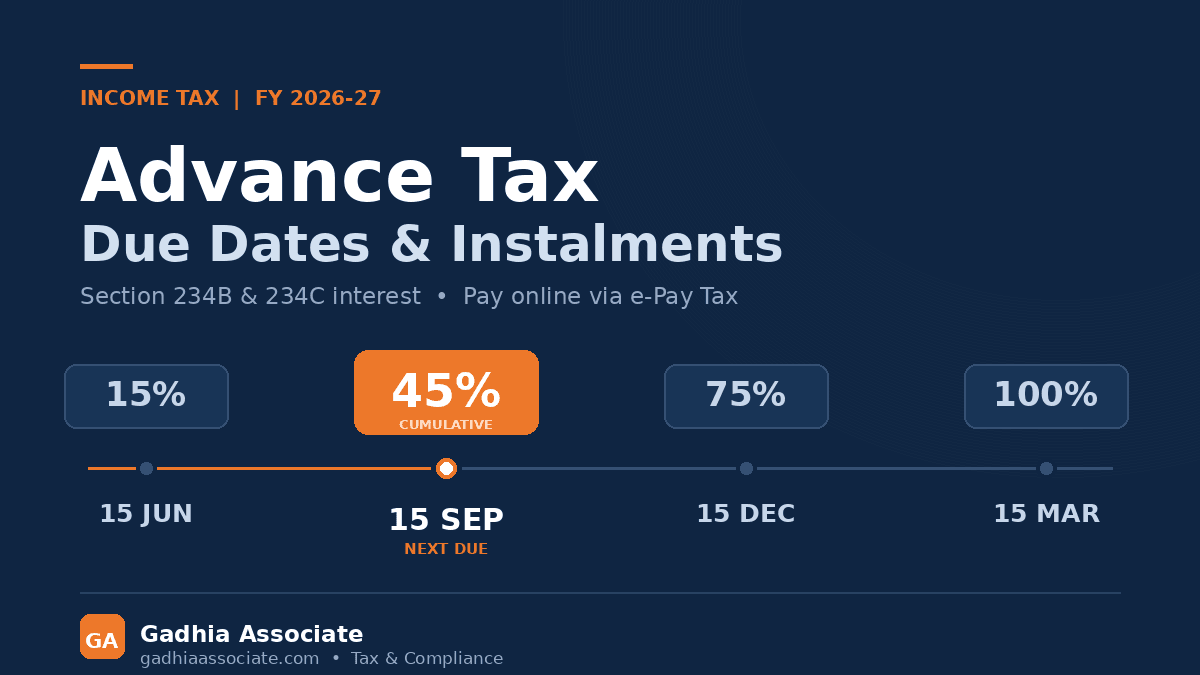
Advance tax is income tax you pay during the year itself, in four instalments, instead of paying everything at the end. For FY 2026-27 the due dates are 15 June 2026 (15% of your estimated tax), 15 September 2026 (45% cumulative), 15 December 2026 (75% cumulative) and 15 March 2027 (100%). Anyone whose tax liability for the year, after reducing TDS and TCS, is Rs 10,000 or more has to pay it — and missing an instalment invites interest under Section 234C, while paying too little overall invites interest under Section 234B.
With the 15 September instalment approaching, this is the moment many business owners and professionals in Junagadh and across Gujarat discover they are behind. Here is who must pay, how the percentages work, how the two interest sections differ, and how to pay advance tax online.
Who Has to Pay Advance Tax?
The rule is simple. If your estimated tax for the year — on total income from all sources, reduced by TDS and TCS already deducted — comes to Rs 10,000 or more, you must pay advance tax. This applies to individuals, HUFs, firms, LLPs and companies alike.
The people most often caught out are:
- Traders and shop owners whose business profit carries no TDS at all
- Doctors, consultants and freelancers whose clients deduct TDS below their actual slab rate
- Salaried people with capital gains on shares or property, or sizeable interest, dividend or rental income
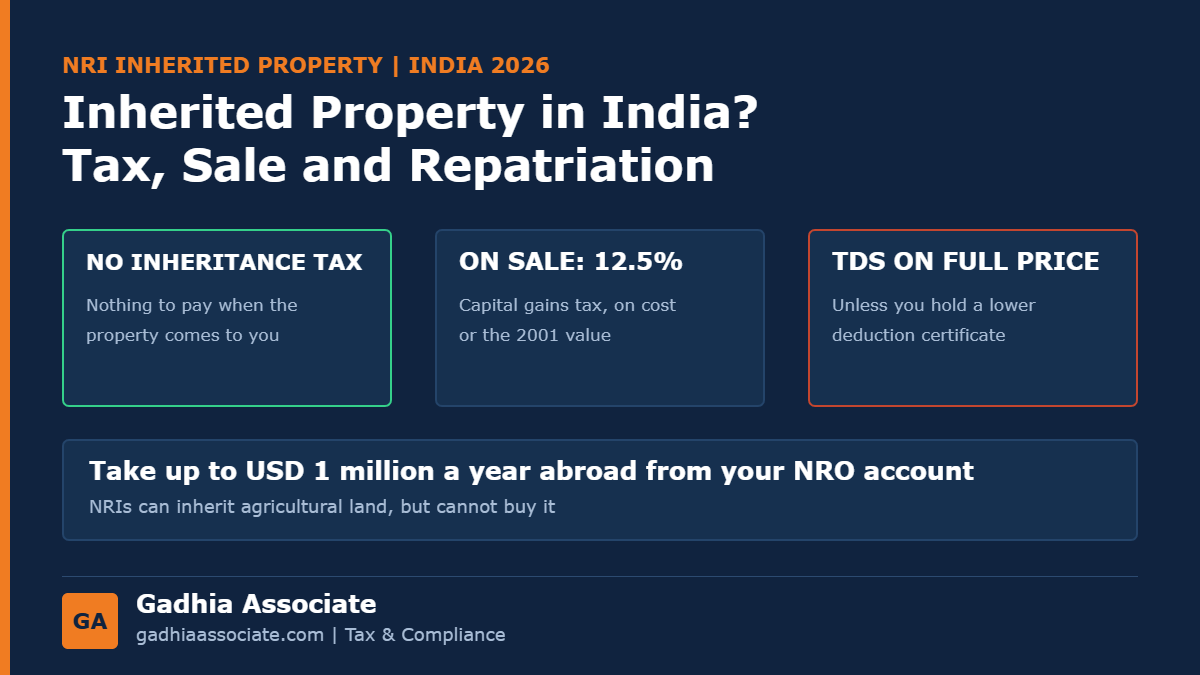
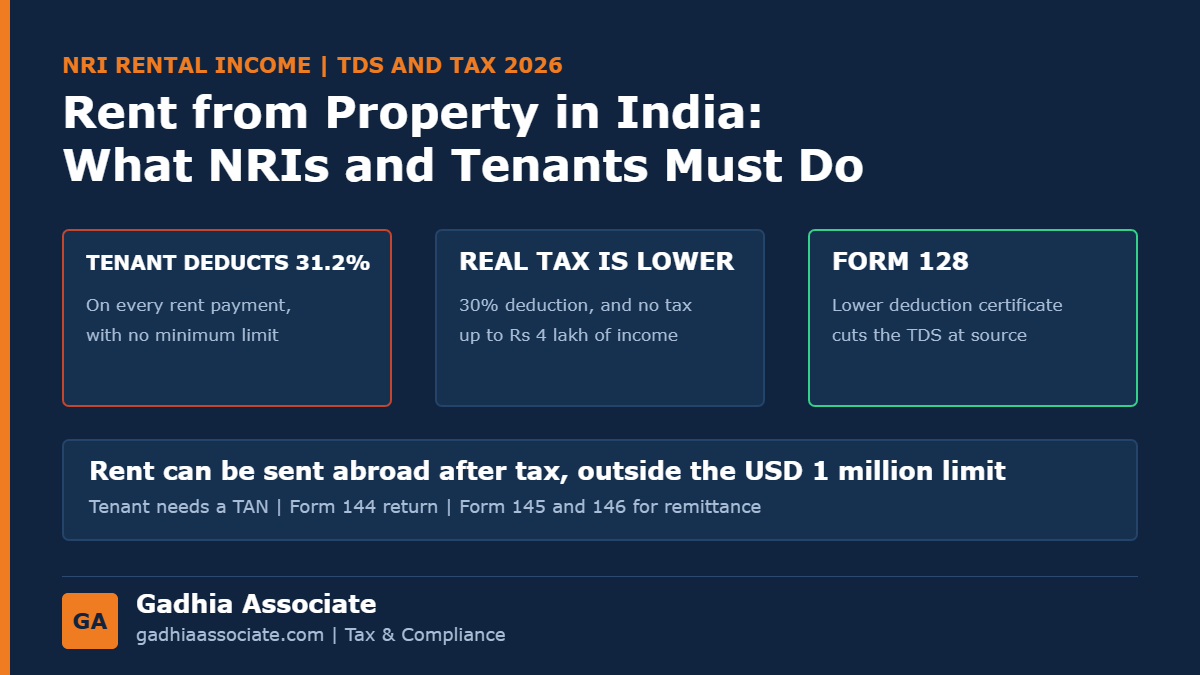
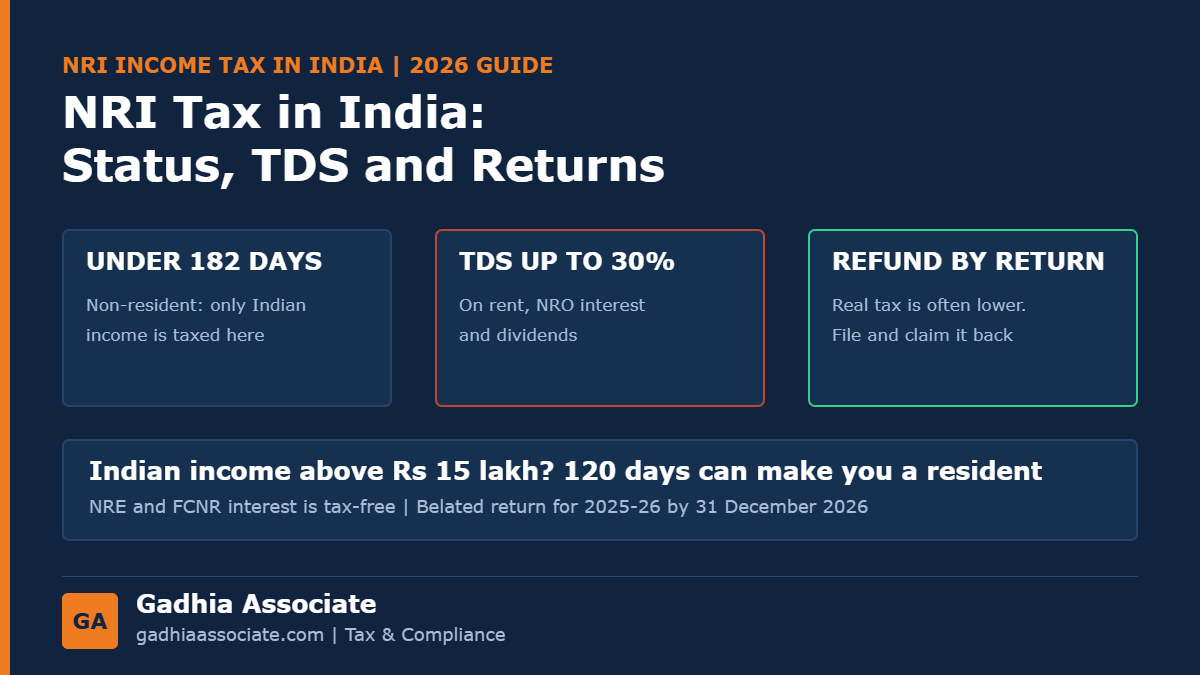
- NRIs earning rent or capital gains in India
- Companies and LLPs, which pay advance tax even on modest profits
A salaried person with full TDS and no other income usually has nothing left to pay. The moment a second income stream appears, advance tax becomes your responsibility, not your employer's.
Do Senior Citizens Have to Pay Advance Tax?
Resident senior citizens aged 60 years or above are exempt from advance tax — provided they do not have income from business or profession. A retired person living on pension, bank interest and rent can simply pay the whole amount as self-assessment tax before filing the return, with no Section 234B or 234C consequence for the advance tax instalments.
But if that same senior citizen runs a shop, a proprietorship or a consulting practice, the exemption falls away and the normal instalment schedule applies. Check the source of income carefully rather than going by age alone.
Advance Tax Due Dates and Percentages for FY 2026-27
The percentages are cumulative, not separate slices. By 15 June you should have paid 15% of your total estimated tax for the year. By 15 September the total paid should reach 45%, which means a further 30% in that instalment. By 15 December you should be at 75%, and by 15 March at 100%.
If your estimated tax is Rs 2,00,000: Rs 30,000 by 15 June, Rs 90,000 total by 15 September, Rs 1,50,000 by 15 December and the full Rs 2,00,000 by 15 March 2027. Paid nothing in June? Your September payment simply needs to cover the full 45% — you catch up, you do not lose the chance.
Presumptive taxpayers get a concession. If you declare income under Section 44AD or 44ADA, you need not follow the four-instalment schedule at all — pay 100% in a single shot by 15 March 2027. Miss that date and interest applies on the whole amount.
Note that the Income-tax Act, 2025 is in force from 1 April 2026 and uses "tax year" in place of the older previous year and assessment year language, with these provisions renumbered. The concept, dates and percentages continue exactly as before, so do not be alarmed if a challan or notice quotes an unfamiliar section number.
What Happens If I Miss the 15 September Instalment?
Nothing dramatic happens on 16 September — no notice, no penalty, no prosecution. Something quieter happens: interest starts running under Section 234C at 1% per month on that quarter's shortfall, accumulating until you file your return.
For the June, September and December instalments the shortfall attracts interest for three months each; for March, one month. A September shortfall of Rs 60,000 therefore costs roughly Rs 1,800 — small alone, but it stacks with every other missed instalment.
Practical advice: pay what you can by 15 September even if it is not exactly 45%. Interest is charged only on the shortfall, so a partial payment genuinely reduces the damage.
What Is the Difference Between Section 234B and 234C?
Both charge simple interest at 1% per month or part of a month, and both relate to advance tax — but they punish two different failures, and you can easily attract both in the same year.
Section 234C is about timing. It applies when you pay less than the required cumulative percentage by a particular instalment date. It is computed separately for each of the four instalments, on the shortfall in that instalment, for three months (one month for the final March instalment). Even if you eventually pay 100% of your tax by 31 March, 234C still applies for the quarters where you fell behind.
Section 234B is about the total. It applies when total advance tax paid during the year is less than 90% of the final assessed tax. Interest runs at 1% per month from 1 April of the following year until you actually pay the balance as self-assessment tax.
Simplest way to remember it: 234C is the quarterly late charge, 234B is the annual shortfall charge. 234C stops when the year ends; 234B keeps running until you pay.
How Do I Calculate My Advance Tax?
Work through it in this order:
- Estimate your total income for the full year from every head — business or professional income, salary, house property, capital gains, interest, dividends and other sources
- Subtract deductions you will legitimately claim, and pick your regime (old or new) first, since liability differs sharply
- Compute tax at the applicable slab or corporate rate, add surcharge where applicable and 4% health and education cess
- Deduct TDS and TCS already credited — check Form 26AS and the AIS so you do not double-pay
- If the balance is Rs 10,000 or more, apply the cumulative percentage for the instalment that is due
Capital gains are treated realistically: you cannot forecast a gain you had not yet made, so the instalment falling due after the gain arises is the one that must carry the tax. If you sold property or booked large equity gains, our Capital Gain Tax Calculator gives a quick working number, and the GST Calculator on our site helps when you are simultaneously reconciling turnover for indirect tax.
How Do I Pay Advance Tax Online?
Advance tax is paid through the e-Pay Tax facility on the income tax e-filing portal, which replaced the older standalone challan site. The challan is the one traditionally known as ITNS 280.
- Open e-File > e-Pay Tax after logging in (payment without login is also available using PAN)
- Select New Payment and choose the correct head — companies or other than companies
- Choose the correct tax year and set type of payment to Advance Tax (100) — the single most common mistake
- Enter the tax, surcharge and cess break-up, then pick net banking, debit card, UPI, NEFT/RTGS or over the counter
- Complete the payment and download the challan receipt immediately — save the CIN and BSR code
- Verify after a few days that it reflects in Form 26AS and AIS
Keep every challan in one folder for the year — a missing challan is the difference between a smooth filing and an avoidable demand notice.
How Gadhia Associate Can Help
Gadhia Associate is a tax and compliance firm in Junagadh, Gujarat, serving businesses, professionals, companies and NRIs across India. We estimate your liability, compute each instalment, pay the challan on time and reconcile with Form 26AS. See our Income Tax Services and GST Services pages, or try our GST Calculator and Capital Gain Tax Calculator. Book a free consultation before 15 September and pay the right amount, on the right date, under the right head.
This article reflects the position as of August 2026. Tax rules, due dates and interest provisions change through CBDT notifications, circulars and amendments. Please confirm the current position with a qualified professional before acting on anything stated here.