Converting a Proprietorship into a Private Limited Company: Capital Gains Exemption, GST Registration and ITC Transfer, Stamp Duty, and the Mistakes That Undo It
A ceramic tiles trader from Morbi had run his business as a proprietorship for eighteen years. Turnover had crossed Rs 9 crore, his son had joined, and his bank had started asking for "a proper company balance sheet" before increasing the cash credit limit. He had one worry: "If I move everything into a company, will I pay capital gains tax on my own godown and stock?"
The answer was no. But only because the conversion was done in a specific way, with conditions that had to be kept for five years. Done casually, the same move could have triggered capital gains, a stamp duty bill and lost GST credit.
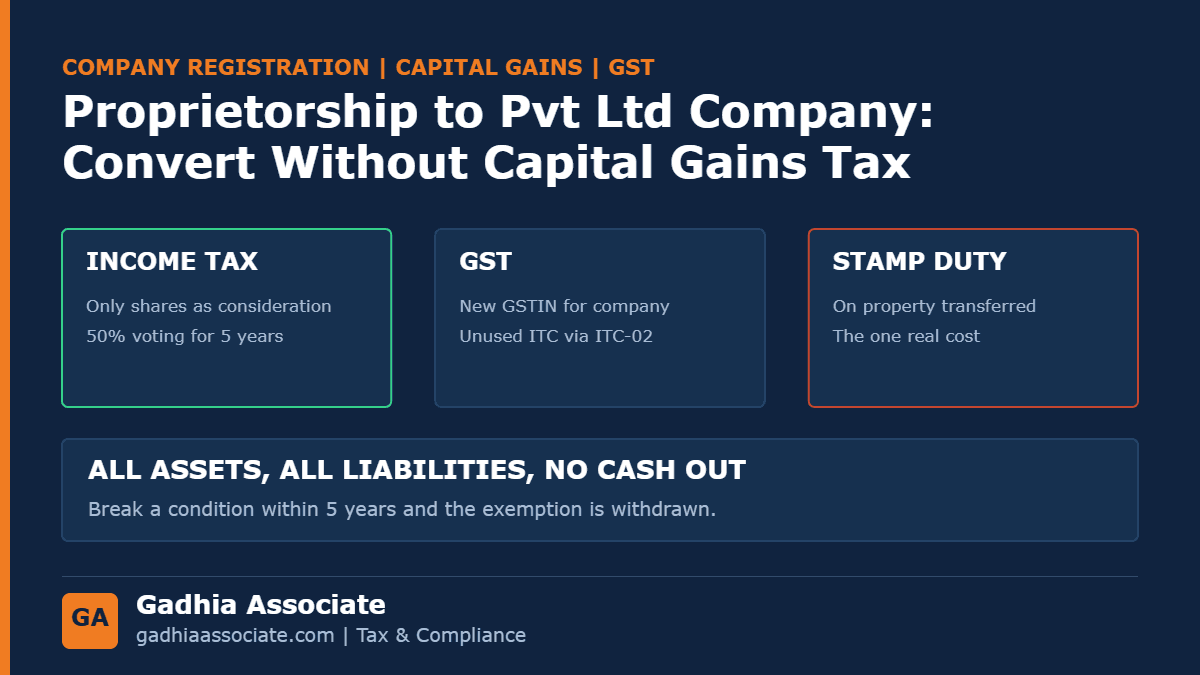
Short answer: A proprietorship cannot be "converted" into a company under the Companies Act the way a partnership firm or LLP can. Instead, you register a new private limited company and it takes over the entire running business, with all assets and liabilities. If the proprietor gets only shares in return and keeps at least 50% of the voting power for five years, there is no capital gains tax (earlier Section 47(xiv), now Section 70(1)(xf) of the Income-tax Act, 2025). On the GST side, the company takes a fresh registration, unused input tax credit is transferred through Form GST ITC-02, and the transfer of a business as a going concern is exempt from GST. Stamp duty on immovable property is the one cost that planning cannot fully avoid.
Why do businesses move from proprietorship to a company?
- Limited liability: a proprietor's house and savings are exposed to business debts. A shareholder's risk is limited to the company.
- Banks and large buyers: lenders, corporate customers and government tenders often prefer, or require, a company.
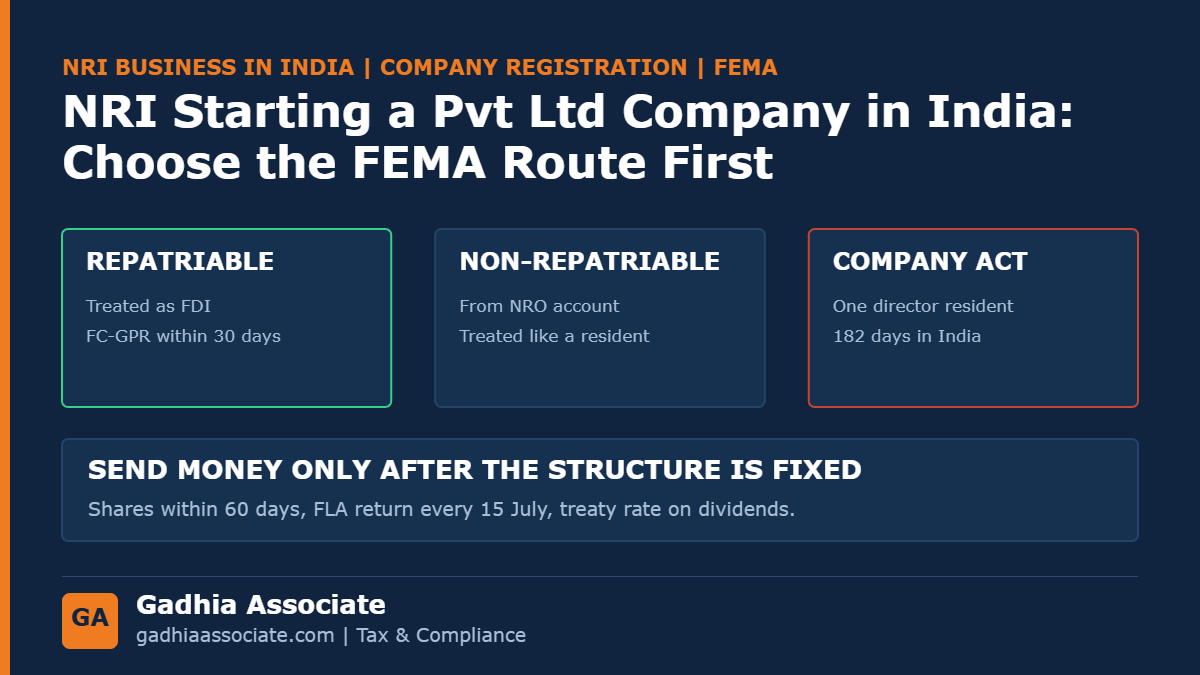
- Tax rate on retained profit: a company can pay tax at about 25.17% under the concessional regime, against 30% plus surcharge and cess for a proprietor at higher incomes. This helps if profits are reinvested.
- Succession and family: shares can be given to children gradually. A proprietorship ends with the proprietor.
- Investors: equity cannot be issued in a proprietorship.
How is it actually done?
- Register a private limited company through SPICe+ with the proprietor as a director and shareholder, and at least one more director and shareholder (often a spouse or child). The objects clause should cover the existing business.
- Fix the transfer date, usually the start of a financial year so the books split cleanly.
- Prepare a closing balance sheet of the proprietorship on that date, listing every asset and liability.
- Sign a business transfer agreement (also called a succession agreement) under which the company takes over the whole business as a going concern, with all assets and liabilities.
- Allot shares to the proprietor equal to the net worth taken over, and file the return of allotment with the ROC.
- Move GST, bank accounts, licences and contracts to the company, as explained below.
What conditions protect you from capital gains tax?
The exemption is available only if all of these hold:
- All the assets and liabilities of the proprietorship relating to the business, immediately before the succession, become the company's
- The proprietor's shareholding in the company is at least 50% of the total voting power, and it stays at 50% or more for five years from the date of succession
- The proprietor receives no consideration or benefit, directly or indirectly, other than by way of allotment of shares
If any condition is broken within five years, the exemption is withdrawn and the capital gains become taxable in the company's hands in the year of the breach (earlier Section 47A). The company then pays tax on gains it never received in cash.
The mistakes that quietly break the exemption
In our experience, these are the usual culprits:
- Keeping one asset outside. The owner keeps the godown in his own name "just in case." Now all assets have not been transferred.
- Crediting the capital account as a loan. The company records part of the proprietor's capital as an unsecured loan and repays it next year. That repayment is consideration other than shares.
- Shares diluted too early. A son is given shares in year three and the father's holding drops to 45%. The exemption is gone.
- Paying the owner "goodwill". Any cash for goodwill or a non-compete fee is consideration other than shares.
- A wrong valuation that later leads to questions under the share premium and gift provisions.
Salary to the former proprietor as a working director is not consideration for the transfer, but it should be at a normal level and documented properly.
What happens to GST?
A GST registration is tied to a PAN. The company has a new PAN, so it needs a new GSTIN. The steps are:
- The company applies for GST registration before or on the transfer date
- The transfer of the business as a going concern is an exempt supply, so no GST is charged on the transfer itself
- The proprietorship files Form GST ITC-02 to transfer its unused input tax credit to the company, and the company accepts it on the portal
- The proprietorship's registration is cancelled through REG-16, giving transfer of business as the reason and quoting the company's GSTIN
- E-way bill and e-invoice settings are updated, and customers are told the new GSTIN so their credit is not affected
The most common GST mistake is invoicing from the old GSTIN for weeks after the transfer date. That creates mismatches in customers' GSTR-2B and a mess in both sets of returns.
Stamp duty: the one real cost
Movable assets such as stock, debtors and machinery move under the business transfer agreement. Immovable property is different. A shop, godown or factory land in the proprietor's name needs a registered conveyance to the company, and in Gujarat stamp duty is charged on the higher of the consideration or the jantri value, plus registration fees. For a business with valuable property, this can be the biggest single cost of the conversion.
Some owners keep the property in their own name and lease it to the company instead. That avoids stamp duty on the transfer, but it means not all assets move to the company, which puts the capital gains exemption at risk. The right choice depends on what the property is worth, what the other assets are worth, and whether there is any gain to protect. This is a decision to make with numbers in front of you, not on instinct.
Income tax points after the conversion
- Depreciation: the company continues depreciation on the written-down value of the assets. There is no fresh step-up in cost.
- Losses: accumulated business losses and unabsorbed depreciation of the proprietorship can be carried forward by the company if the exemption conditions are met (earlier Section 72A(6)).
- Tax regime: the company can choose the concessional 22% rate from its first year.
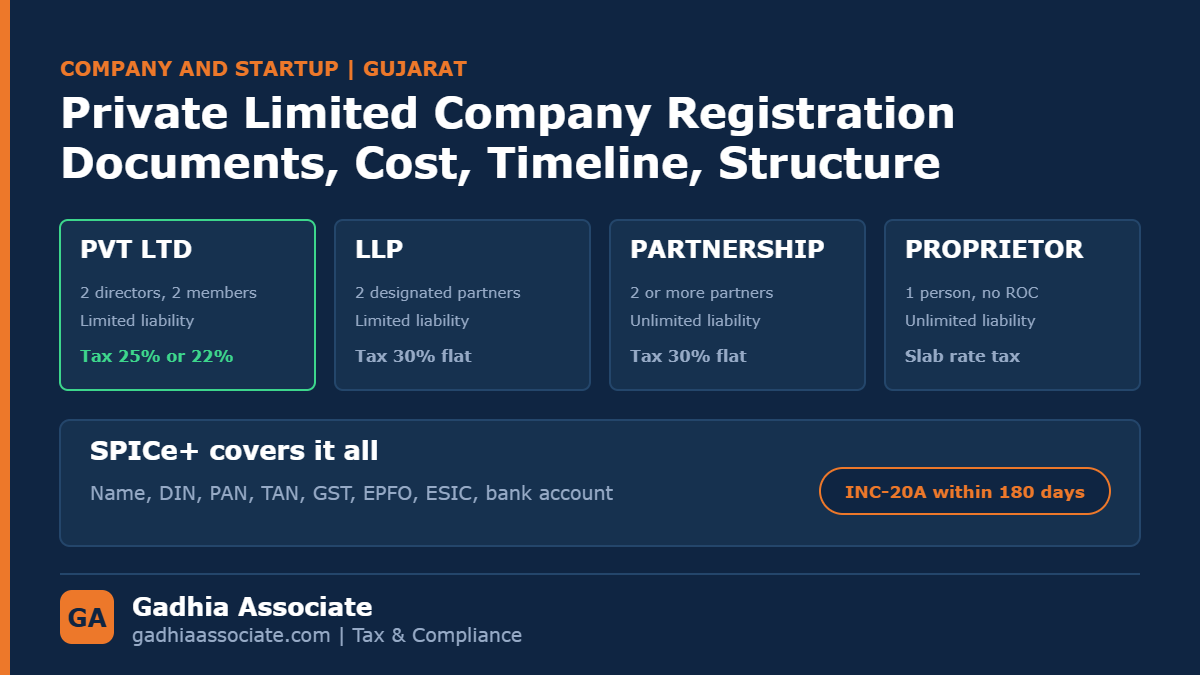
- Two returns for the year of transfer: the proprietor files for the period up to the transfer date, and the company files for the period after.
- TDS and advance tax: the company needs its own TAN, and TDS deducted by customers must show the right PAN.
What else needs to move to the company?
- Bank accounts and loans, with the lender's consent to the change in borrower
- Udyam registration, IEC for exporters, FSSAI, trade licence, pollution consents and factory licence
- Shops and establishment registration, PF and ESIC for employees
- Customer and supplier contracts, rent agreements, insurance policies
- Trademarks used by the business, through an assignment deed
- Payment gateways, POS machines, UPI merchant IDs and e-commerce seller accounts
Is conversion right for every proprietor?
No. A company brings audit, board meetings, ROC filings and stricter rules on taking money out. If your profit is modest, you spend most of what you earn, and your bank and customers are happy, a proprietorship may still be the better fit. Conversion makes the most sense when turnover and profit are growing, the next generation is joining, you need bigger bank limits, or your contracts carry real liability.
What we do for you
- Assess whether conversion saves you money and what it will cost, on your actual balance sheet
- Plan the transfer date, share capital and valuation
- Register the private limited company, including DSC, SPICe+, PAN, TAN and bank documentation
- Draft the business transfer agreement and board resolutions
- Ensure every condition of the capital gains exemption is met and tracked for five years
- Obtain the new GSTIN, file ITC-02, and cancel the old registration without gaps in invoicing
- Advise on stamp duty and the best way to deal with property
- Migrate licences, Udyam, IEC, PF and ESIC to the company
- Handle the company's accounting, audit, ROC filings and tax returns after conversion
Gadhia Associate has been in practice since 2007 and has handled work for over 7,000 clients across Saurashtra and Gujarat, with a 5.0 Google rating from more than 100 reviews. Traders, manufacturers and family businesses from Junagadh, Rajkot, Morbi, Veraval, Gir Somnath and Porbandar come to our Junagadh office, where same-day appointments are available. The work can equally be done digitally for businesses anywhere in India. Fixed-fee and monthly plans are available.
Planning to convert from 1 April 2027? The groundwork should start now. Call or WhatsApp +91 82005 28355, or visit our Junagadh office. The first consultation is free.
Frequently asked questions
Can a proprietorship be directly converted into a private limited company?
Not directly under the Companies Act. You register a new private limited company, which then takes over the proprietorship's entire business, assets and liabilities under a business transfer agreement.
Is there capital gains tax when a proprietorship becomes a company?
Not if all business assets and liabilities move to the company, the proprietor receives only shares, and keeps at least 50% of the voting power for five years. Breaking any condition makes the gain taxable.
Can I keep my old GST number?
No. GST registration is linked to PAN, and the company has a new PAN. The company takes a new GSTIN, and unused credit is transferred through Form GST ITC-02.
Is GST payable on transferring the business to the company?
No. Transfer of a business as a going concern is exempt from GST, provided the whole business is transferred.
How long does the conversion take?
Company registration usually takes one to two weeks. The full process, including GST, bank, licences and property, is typically completed in one to two months when planned in advance.
Will my bank loan move to the company?
Only with the bank's consent. Most banks require a fresh sanction or an assignment to the company, and may ask the proprietor to give a personal guarantee.
Position as of 22 September 2026. The Income-tax Act, 2025 has renumbered the income tax provisions from 1 April 2026; the older section numbers are mentioned because that is how people still search for them. GST procedures, stamp duty rates and jantri values change through notifications. Confirm the current position for your business before acting.