Selling to the Government on GeM in 2026: Registration, MSE Benefits (No Bid Security, 25% Procurement, L1 Plus 15%), Payment in 10 Days and GST TDS
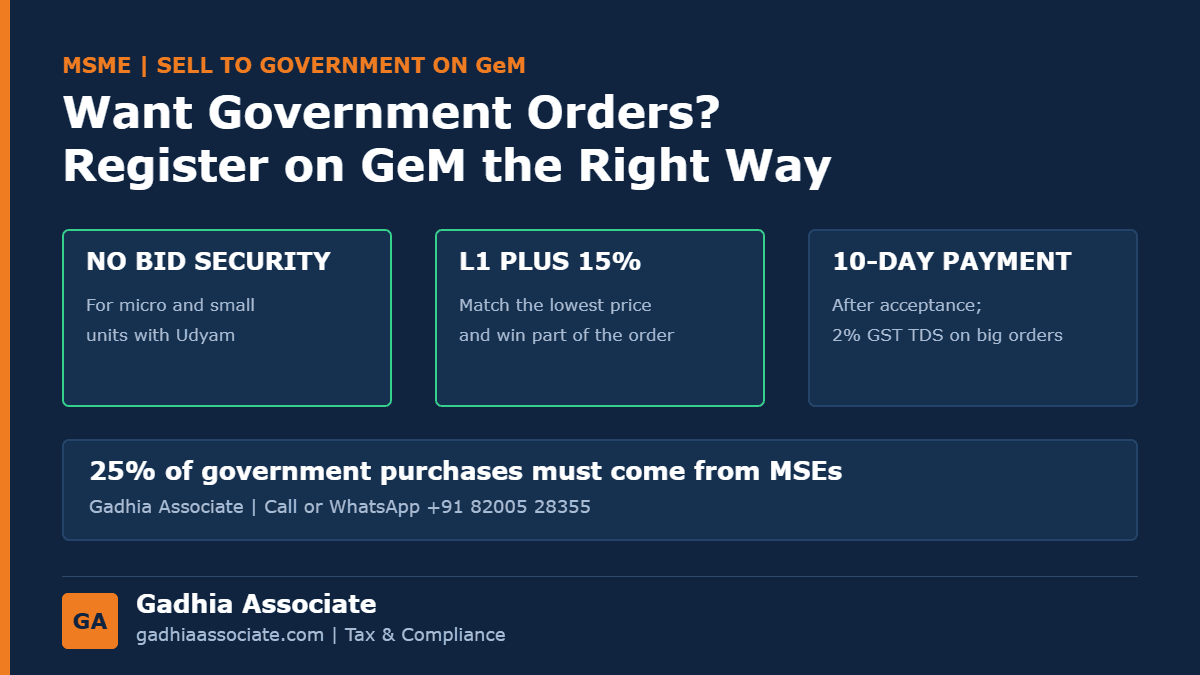
Small businesses can sell directly to government buyers on GeM, and registered micro and small units skip bid security and get purchase preference.
Kalpeshbhai makes school benches and steel cupboards in Rajkot. A district education office has asked him to quote on GeM for 400 benches, but he has never registered on the portal, has no Udyam certificate, and has heard that government buyers pay late. A competitor from Ahmedabad already wins most such orders.
Government departments, public sector companies and many state bodies now buy through the Government e-Marketplace. For small manufacturers and service providers in Saurashtra, it is one of the steadiest sources of orders, if the registration and bids are handled correctly. Here is how it works in 2026.
Short Answer: GeM is the government's online marketplace, and central government buyers must use it for items listed there, with many state bodies also buying through it. A business registers with its PAN, GST, Udyam and bank details, lists its products or services, and bids for orders. Micro and small enterprises with Udyam registration are exempt from bid security and tender fees, can win a share of an order by matching the lowest price if their quote is within 15% of it, and benefit from the rule that 25% of government purchases must come from them. Buyers are expected to pay within 10 days of accepting the goods, and government buyers deduct 2% GST TDS on larger contracts.
Our team handles GeM registration, Udyam, product listing, bid documents and the GST and tax side of government orders. Call or WhatsApp +91 82005 28355, or see the details at the end of this guide.
Registering as a seller
- Basic details: PAN, the authorised person's Aadhaar-linked mobile, GST registration, bank account and income tax return details.
- Udyam: needed to claim the benefits for micro and small enterprises. See Udyam registration.
- Profile and catalogue: add products or services in the right category, with specifications, brand details and prices.
- Manufacturers: some categories need an assessment of the factory or brand before you can list.
- Keep it current: expired documents or mismatched details can block bids.
Benefits for micro and small enterprises
- 25% rule: central government buyers must source at least 25% of their yearly purchases from micro and small enterprises, including a share for SC and ST owners and for women.
- No bid security: registered units are exempt from earnest money and tender fees for the items they are registered for.
- Purchase preference: a unit quoting within 15% of the lowest price can win part of the order by matching that price.
- Startups: recognised startups can be exempt from prior turnover and experience conditions in many bids. See Startup India registration.
- More schemes: see MSME benefits and tender preference.
How orders come
- Direct purchase: small orders can be placed directly on listed products.
- L1 purchase: for mid-size orders, the buyer compares listed sellers and buys from the lowest.
- Bids and reverse auctions: larger orders go to bids, sometimes followed by a reverse auction.
- Read the bid: delivery period, inspection, warranty and any performance security decide whether the order is worth taking.
Payment, GST and tax
- Payment timeline: buyers are expected to pay within 10 days of the receipt and acceptance certificate on GeM.
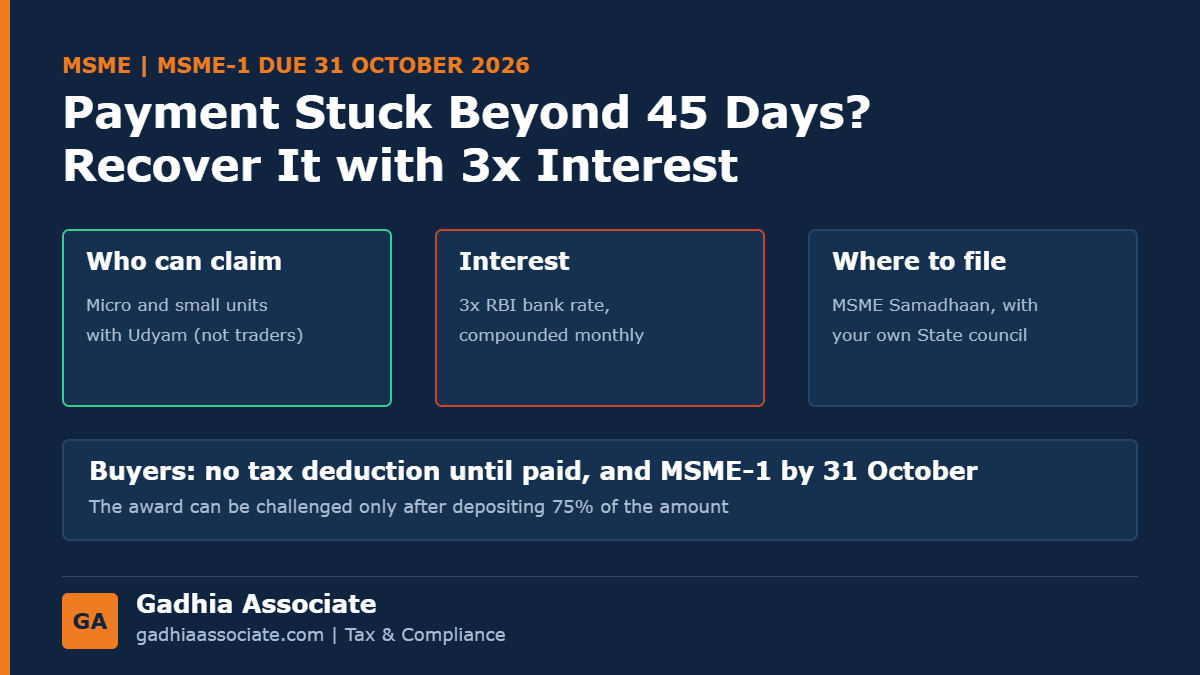
- If payment is late: micro and small suppliers can also use the 45-day payment protection. See MSME payment not received in 45 days.
- GST TDS: government buyers deduct 2% GST TDS on contracts above Rs 2.5 lakh, which you claim as credit. See GST TDS for contractors.
- Invoices: the invoice on GeM must match your GST return, or the credit and payment can get stuck.
- Income tax TDS: deducted on service and works orders, and claimed in your return.
Why sellers lose bids
- Products listed in the wrong category or with incomplete specifications
- Missing Udyam, so the bid security exemption is not applied
- Bids submitted late or without the required documents
- Prices quoted without allowing for freight, GST and inspection costs
- Rejection at inspection for not meeting the bid's specifications
Back to Kalpeshbhai. He registers on Udyam, then on GeM with his GST and bank details, and lists his benches and cupboards in the right categories with full specifications. On the education office's bid, he pays no bid security as a registered small unit, and his quote is within 15% of the Ahmedabad seller's, so he matches the lowest price and wins part of the order. After delivery and acceptance, the payment arrives within days, net of 2% GST TDS, which he accepts on the GST portal and uses to pay his tax.
How we help
- GeM seller registration and profile set-up
- Udyam and GST registrations
- Product listing and bid documents
- GST TDS credit and invoice matching
- Follow-up on delayed government payments
- Accounts and tax returns for government suppliers
Gadhia Associate has been in practice since 2007 and has handled work for over 7,000 clients, with a 5.0 Google rating from more than 100 reviews. Manufacturers and service providers from Junagadh, Rajkot, Morbi, Jamnagar and Gondal come to our Junagadh office, where same-day appointments are available. Work for clients elsewhere is handled online.
Want to sell to government departments? Get registered on GeM the right way and claim your MSE benefits. Call or WhatsApp +91 82005 28355, or message us on WhatsApp. The first consultation is free.
Frequently asked questions
What is GeM?
The Government e-Marketplace, the online portal through which government departments and public sector bodies buy goods and services.
What documents are needed for GeM registration?
PAN, Aadhaar-linked mobile of the authorised person, GST registration, bank details, income tax return details and Udyam for MSE benefits.
Do micro and small enterprises pay bid security on GeM?
No. Registered micro and small units are exempt from bid security and tender fees for the items they are registered for.
What is the L1 plus 15% rule?
A micro or small unit quoting within 15% of the lowest price can win part of the order by matching that price.
How quickly do government buyers pay on GeM?
Buyers are expected to pay within 10 days of the receipt and acceptance certificate.
Is GST TDS deducted on GeM orders?
Yes, government buyers deduct 2% on contracts above Rs 2.5 lakh, claimable as credit.
Position as of 4 November 2026, under the public procurement policy for micro and small enterprises and GeM's terms as they stand. Bid conditions vary, so read each bid before you quote.