GST and Income Tax for Medical Stores in 2026: 5% on Most Medicines, Composition at 1%, Expired Stock, 10+1 Schemes and Cash Sales
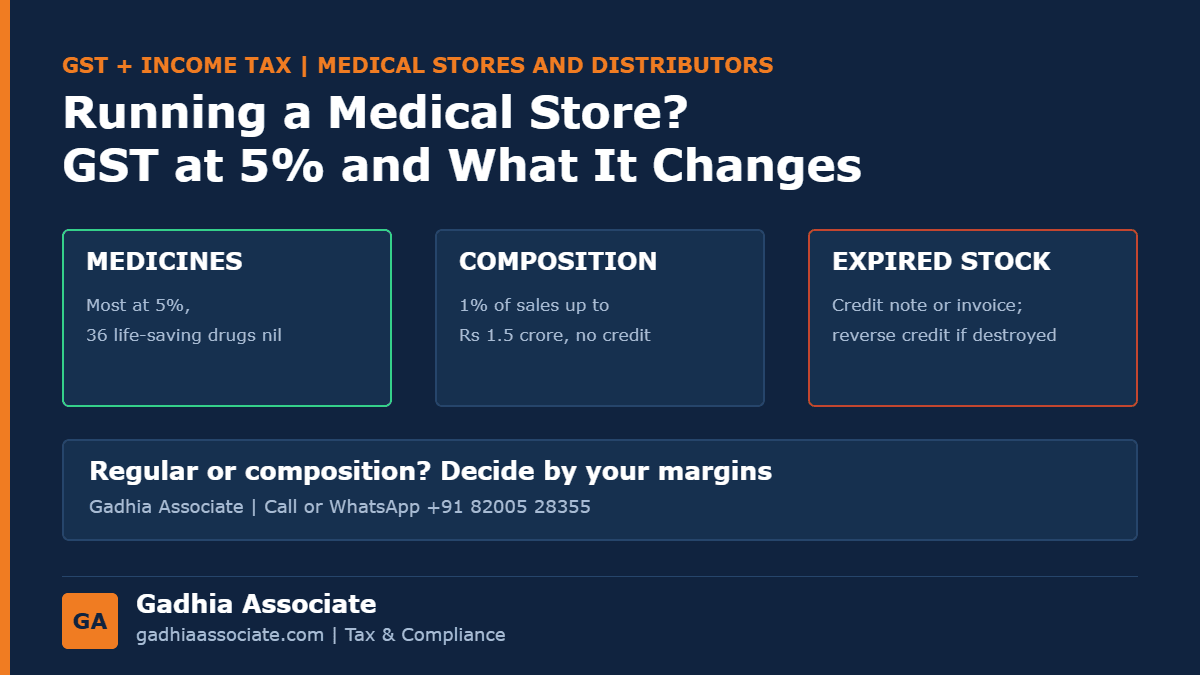
Most medicines now carry 5% GST, and a small medical store can often pay just 1% of sales under composition, if its purchases and margins suit it.
Pareshbhai runs two medical stores in Junagadh, one near the civil hospital, with sales of about Rs 1.2 crore a year. Most of it is branded and generic medicines, with some baby care, supplements and cosmetics, and a monthly supply to a nursing home. Expired medicines worth Rs 2.5 lakh lie in cartons, distributors give 10+1 schemes, most sales are in cash, and his billing software still showed old rates on some items long after the September 2025 rate cut.
Medical stores are among the busiest small businesses in every town, and the GST rate cut on medicines changed their billing and their tax. Here is how GST and income tax work for medical stores and pharma distributors in 2026.
Our team handles GST registration, returns, composition decisions and income tax for medical stores and distributors. Call or WhatsApp +91 82005 28355, or see the details at the end of this guide.
GST rates a medical store deals with
- Most medicines: 5%, down from 12% before 22 September 2025.
- Life-saving drugs: 36 drugs for cancer, rare and severe chronic diseases carry no GST.
- Devices and kits: diagnostic kits, glucometers, test strips and medical thermometers are at 5%.
- Other items: cosmetics, supplements and baby care follow their own rates, so check each HSN code.
- Billing software: update the rate and HSN master, and check bills issued since the rate change. See GST 2.0 rates.
Regular GST or composition
- Composition: for turnover up to Rs 1.5 crore across all businesses under the same PAN, tax at 1% of taxable sales, with no credit, bills of supply instead of tax invoices, and no sales outside Gujarat. See the composition scheme.
- Regular GST: 5% on sales less 5% credit on purchases, which works out to tax on your margin. At a 20% margin, that is about 1% of sales; at a 36% margin, about 1.8%.
- Choose by margin: stores with high margins on generics usually save under composition; stores with low margins or business customers who need credit usually stay regular.
- Switching: composition is chosen before the start of the financial year.
Expired medicines and returns
- Returned to the distributor: either the distributor issues a credit note and you reverse the matching credit, or you issue a tax invoice and treat it as a fresh sale.
- Destroyed stock: input tax credit taken on medicines destroyed or written off must be reversed.
- Records: keep an expiry register and the disposal agency's certificate for destroyed stock.
Schemes and discounts
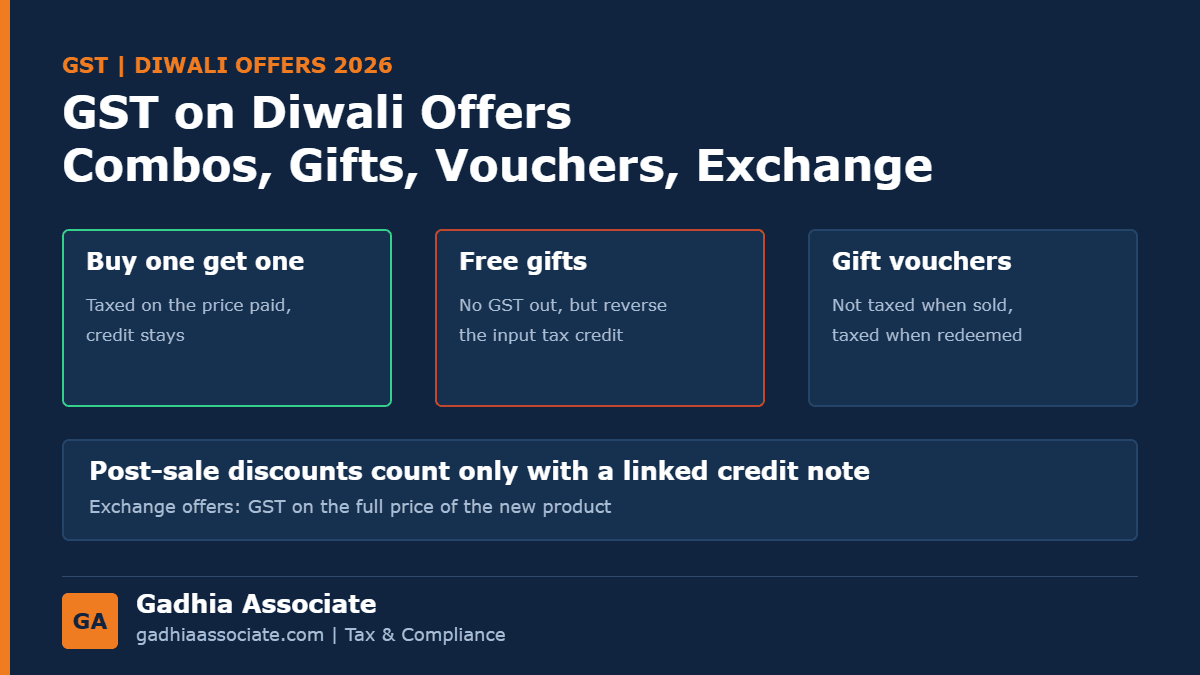
- 10+1 schemes: free units given on the same invoice are part of the price, so no credit reversal is needed.
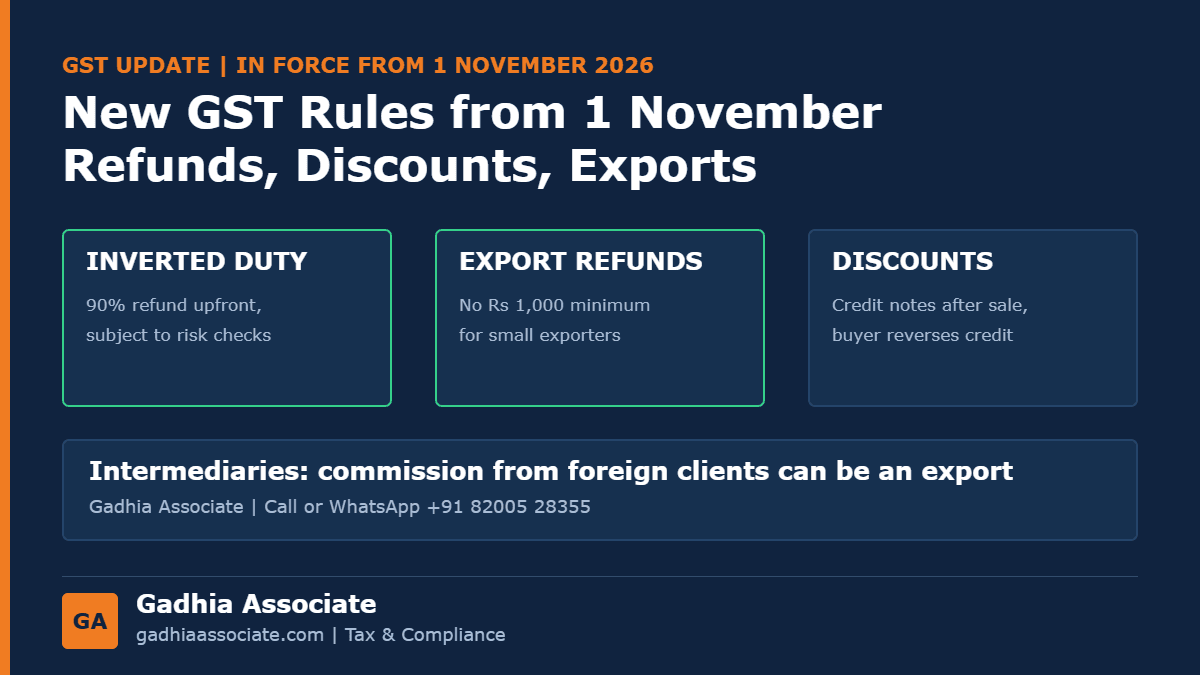
- Later discounts: discounts given after the sale through credit notes follow new rules from 1 November 2026. See GST changes from 1 November.
- Free samples: physician samples are not for sale and should not enter your stock.
Income tax for medical stores
- Presumptive scheme: 6% of digital and 8% of cash sales as profit, for turnover up to Rs 2 crore, or Rs 3 crore if cash receipts are within 5%. See presumptive taxation.
- Books and audit: above the limits, or when declaring lower profit, books and a tax audit may be needed.
- Cash deposits: match daily deposits with the sales reports from your billing software. See cash deposit rules.
- Distributors: buyers with turnover above Rs 10 crore deduct 0.1% TDS on purchases above Rs 50 lakh from one supplier.
Licences and registrations
- Drug licence: a retail or wholesale licence from the state drug control department, with a registered pharmacist.
- Shop registration: under the shops and establishments law. See shop registration in Gujarat.
- FSSAI: needed if you sell nutraceuticals or other food products.
Back to Pareshbhai. His billing software is corrected to 5% and nil for the right products, and bills since the rate change are reviewed. His generics margin is high, so composition would cost about 1% of sales against roughly 1.8% under regular GST, but both stores are under the same PAN and the nursing home needs tax invoices, so he stays regular and claims full credit. Expired stock goes back to distributors against credit notes, the rest is destroyed through an authorised agency with the credit reversed, and the 10+1 schemes need no reversal. He declares 8% of cash and 6% of digital sales as profit, with daily deposits matched to his software reports.
How we help
- GST registration and the composition or regular decision
- Rate and HSN checks for medicines, devices and other items
- Monthly or quarterly GST returns and credit reconciliation
- Expiry returns, credit notes and stock write-offs
- Income tax returns, presumptive or audited
- Replies to GST and income tax notices
Gadhia Associate has been in practice since 2007 and has handled work for over 7,000 clients, with a 5.0 Google rating from more than 100 reviews. Medical stores and distributors from Junagadh, Rajkot, Keshod, Veraval and Porbandar come to our Junagadh office, where same-day appointments are available. Work for clients elsewhere is handled online.
Running a medical store or pharma distribution business? Get your GST rates, scheme choice and returns checked. Call or WhatsApp +91 82005 28355, or message us on WhatsApp. The first consultation is free.
Frequently asked questions
What is the GST rate on medicines now?
5% for most medicines since 22 September 2025, and nil for 36 life-saving drugs.
Can a medical store opt for the composition scheme?
Yes, with turnover up to Rs 1.5 crore, paying 1% of taxable sales, without input tax credit or sales outside the state.
How is GST handled on expired medicines returned to a distributor?
Through a credit note from the distributor, with your credit reversed, or a tax invoice from you as a fresh sale.
Do free units under a 10+1 scheme need credit reversal?
No, when they come on the same invoice as part of the sale.
Can a medical store use the presumptive tax scheme?
Yes, declaring 6% of digital and 8% of cash sales as profit, within the turnover limits.
Does a medical store need FSSAI registration?
Only if it sells nutraceuticals or other food products.
Position as of 2 November 2026, with GST rates as notified from 22 September 2025 and income tax under the Income-tax Act, 2025. Rates depend on each product's classification, so check before you bill.