One Person Company Registration in 2026: Who Can Form One, the Nominee Rule, Cost, Yearly Compliance and When It Beats a Proprietorship
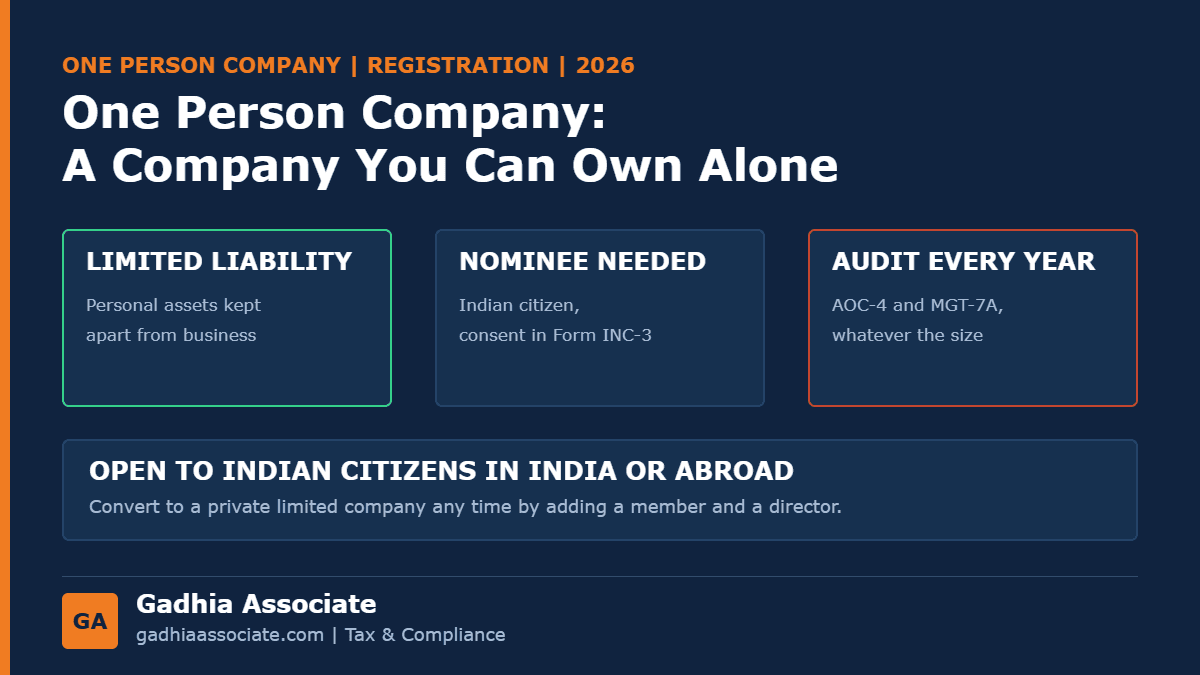
A One Person Company gives a single owner limited liability and a company's credibility, but it brings a yearly audit and ROC filings.
A Junagadh software developer works alone, billing clients in the US and Dubai. A proprietorship was easy to start, but his largest client now wants to sign its vendor contract with a company, and he does not want a business dispute ever to reach his house and savings. He has no partner to bring in, and a private limited company needs at least two people. For him, a One Person Company, or OPC, is the natural next step.
This article explains who can form an OPC, how the nominee works, the registration process and cost, the yearly compliance, and how an OPC compares with a proprietorship and a private limited company.
Short answer: An OPC is a private company with a single member, allowed under the Companies Act, 2013. Since 1 April 2021, any Indian citizen, whether living in India or abroad, can form one, and it can be converted into a private limited company at any time. The owner must name a nominee, also an Indian citizen, who takes over if the owner dies or becomes incapable. A person can form only one OPC, and an OPC cannot carry on non-banking financial or investment activity. Registration is online through SPICe+ and usually takes one to two weeks. Every OPC must get its accounts audited each year and file AOC-4 and MGT-7A, whatever its size, and it pays tax at company rates.
Who can form a One Person Company?
- Owner: only a natural person who is an Indian citizen, whether resident in India or not. NRIs with Indian citizenship can form an OPC. Foreign citizens, including OCI cardholders, cannot.
- One OPC per person: you can form only one OPC, and be the nominee in only one.
- No minors: a minor cannot be the member or the nominee.
- Director: at least one director, usually the owner, and up to 15.
- Restricted activities: an OPC cannot be a Section 8 company, and cannot carry on non-banking financial or investment activity, including investing in the securities of other companies.
What does the nominee do?
The nominee becomes the member of the company if the owner dies or becomes incapable of contracting, so the business does not stop. The nominee must also be an Indian citizen, living in India or abroad, and gives written consent in Form INC-3 at the time of registration. The owner can change the nominee later, and the nominee can withdraw consent, in each case with a filing to the Registrar. Most owners name a spouse, parent or adult child.
How is an OPC registered?
- Digital signature for the proposed director.
- Name approval through SPICe+ Part A. The name carries "(OPC) Private Limited".
- SPICe+ Part B with the memorandum and articles, the nominee's consent in INC-3, the director's declarations and proof of the registered office.
- Certificate of incorporation with the company's PAN and TAN, usually within one to two weeks. The bank account is opened through the linked AGILE-PRO-S form.
- After incorporation: the owner pays the share capital into the company's bank account, and the company files the declaration for commencement of business in INC-20A within 180 days.
What does it cost?
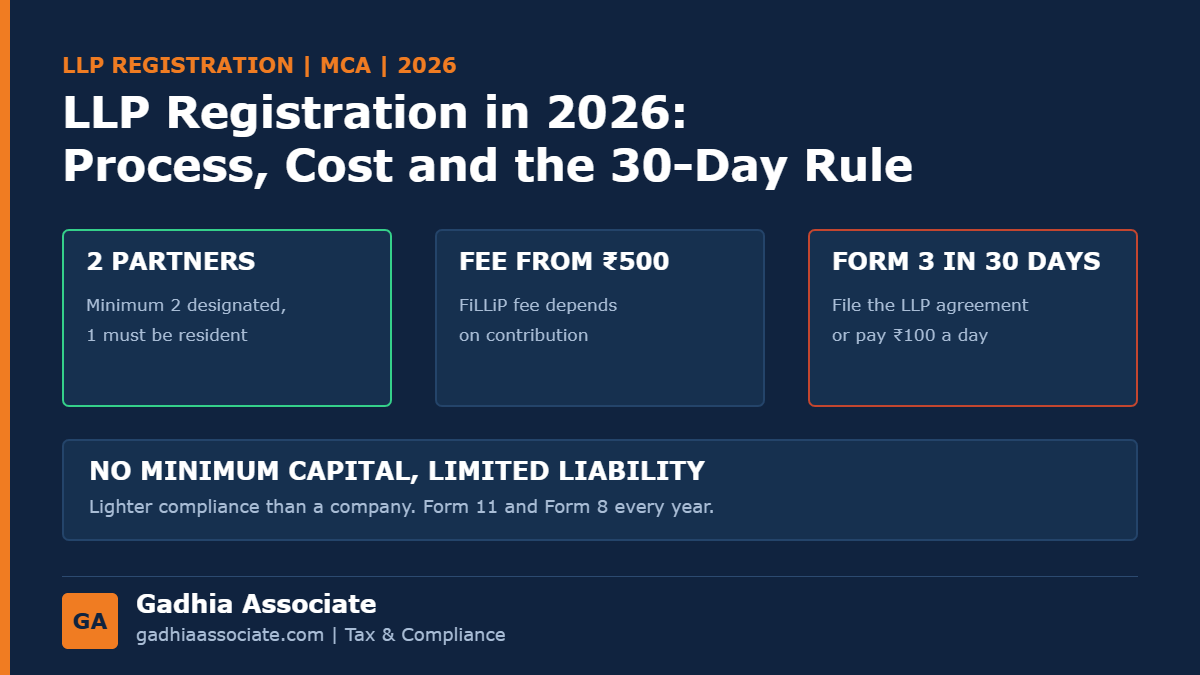
The MCA charges no incorporation fee where the authorised capital is within Rs 15 lakh. The main costs are the digital signature, stamp duty on the memorandum and articles, which depends on the state and the authorised capital, and professional fees. There is no minimum capital, so an OPC can start with Rs 1 lakh or less. The documents are the same as for a private limited company, listed in our guide to private limited company registration in Gujarat.
What must an OPC file every year?
- Statutory audit: the accounts must be audited every year by a chartered accountant, whatever the turnover. The board appoints the first auditor within 30 days of incorporation.
- AOC-4: the financial statements, within 180 days from the end of the financial year, that is, by 27 September.
- MGT-7A: the annual return, within 60 days after that, usually by late November.
- Board meetings: none are required if the OPC has only one director. With more directors, at least one meeting in each half of the calendar year, at least 90 days apart.
- No AGM: an OPC does not hold an annual general meeting. The member's decisions are recorded in the minute book.
- Income tax: the return is due by 31 October, along with TDS and GST returns where they apply.
Late ROC filing is expensive: each form attracts an additional fee of Rs 100 a day, with no upper limit. Our guide to private limited company annual compliance explains how quickly it adds up.
OPC or proprietorship?
- Liability: a proprietor's personal assets are exposed to business debts and claims. An OPC owner's liability is limited to the share capital.
- Credibility: large clients, foreign buyers and lenders often prefer a company, and some insist on one.
- Continuity: an OPC continues through the nominee. A proprietorship ends with the proprietor.
- Tax: a proprietor pays slab rates, and under the new regime, no tax on income up to Rs 12 lakh after the rebate. An OPC pays 25%, or 22% under the concessional regime, plus surcharge and cess, and dividends are taxed again in the owner's hands. At lower profits, a proprietorship usually costs less tax.
- Compliance: a proprietor can use presumptive tax and needs no audit below the limits. An OPC needs an audit and ROC filings every year.
OPC or private limited company?
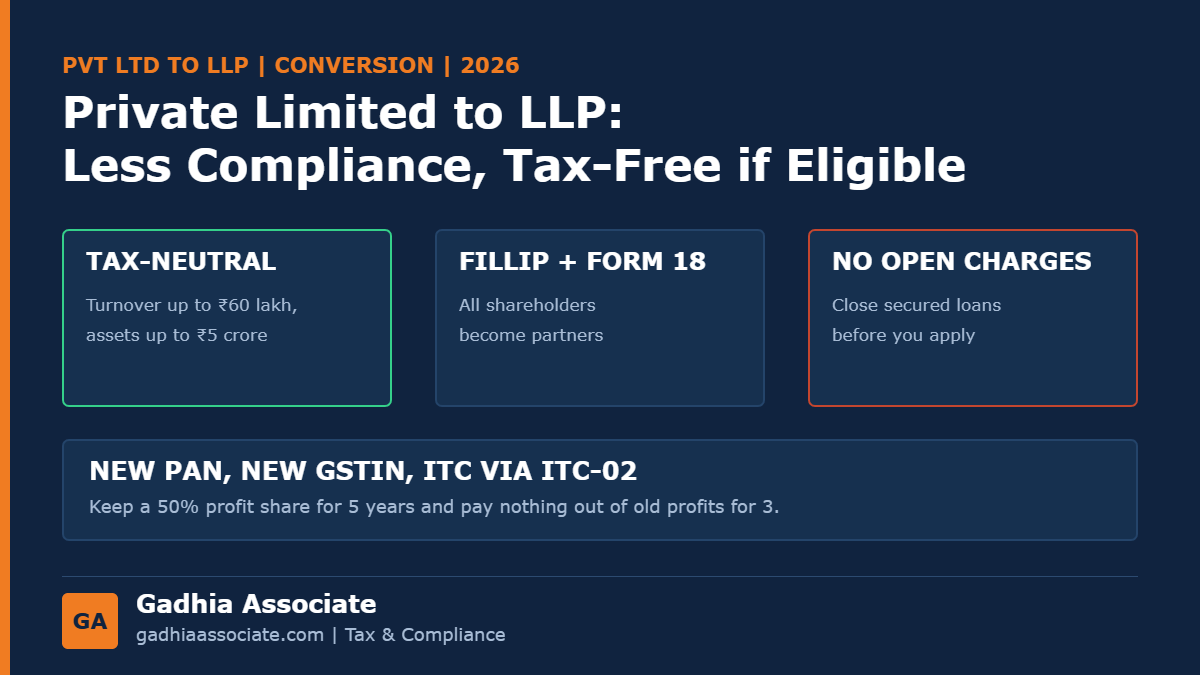
A private limited company needs at least two members and two directors, but it can bring in co-founders and investors, issue new shares and grant ESOPs. An OPC suits a single owner who wants a company without bringing anyone else in. Since April 2021, no turnover or capital limit forces an OPC to convert, and there is no two-year wait before converting voluntarily. When you are ready to add a partner or raise funds, the OPC converts into a private limited company by adding at least one member and one director and altering its memorandum and articles. Our comparison of private limited, LLP and proprietorship covers the wider choice.
Common mistakes
- Forming an OPC for a small, low-profit business where a proprietorship with presumptive tax would cost less.
- Missing the INC-20A filing and the first auditor appointment in the first months.
- Treating the company's money as your own. Withdrawals should be salary, dividend or a documented transaction, as explained in how to take money out of your company legally.
- Forgetting that the audit and ROC filings apply even in a year with no business.
- Choosing a nominee without discussing it, and never updating the nominee after a family change.
What we do for you
- Advise whether an OPC, proprietorship, LLP or private limited company fits your plans
- Register the OPC through SPICe+, including name approval, nominee consent and the bank account
- Complete the first-year steps: INC-20A, auditor appointment, GST and other registrations
- Handle bookkeeping and year-end accounts, or the statutory audit where we are appointed auditor
- File AOC-4, MGT-7A, DIR-3 KYC and the income tax return on time
- Convert the OPC into a private limited company when you grow
Gadhia Associate has been in practice since 2007 and has handled work for over 7,000 clients across Saurashtra and Gujarat, with a 5.0 Google rating from more than 100 reviews. Freelancers, consultants, traders and small manufacturers from Junagadh, Rajkot, Jamnagar, Veraval, Porbandar and Amreli come to our Junagadh office, where same-day appointments are available. Company registration is online, so we also register OPCs for Indian citizens living abroad. Fixed-fee and monthly plans are available.
Working alone and thinking about a company? Call or WhatsApp +91 82005 28355. The first consultation is free.
Frequently asked questions
Can an NRI form a One Person Company in India?
Yes, if the NRI is an Indian citizen. Since April 2021, residence in India is not required. Foreign citizens, including OCI cardholders, cannot form an OPC.
What is the minimum capital for an OPC?
There is no minimum capital. An OPC can start with any amount the owner decides.
Is audit compulsory for an OPC?
Yes. Every OPC must get its accounts audited by a chartered accountant every year, whatever its turnover.
Can an OPC be converted into a private limited company?
Yes, at any time since April 2021, by adding at least one member and one director and altering the memorandum and articles.
How much tax does an OPC pay?
Company rates: 25%, or 22% under the concessional regime, plus surcharge and cess. Dividends paid to the owner are taxed again at slab rates.
Can one person form more than one OPC?
No. A person can form only one OPC and be the nominee in only one.
Position as of 29 September 2026. Company law forms, fees and procedures change from time to time, and stamp duty differs by state. Take advice on your own plans before you register.